
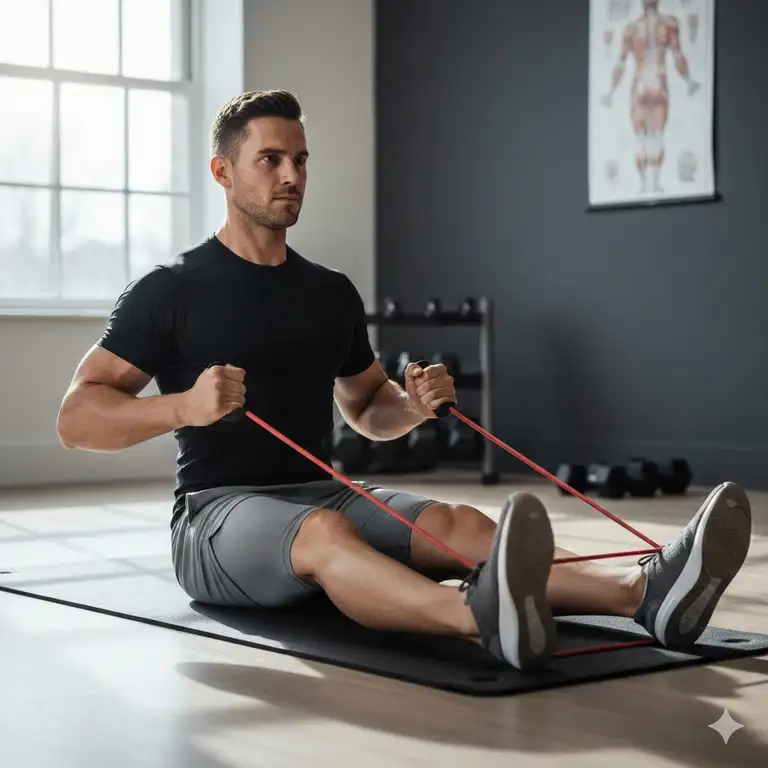
I have spent a significant amount of time in sweaty gyms, clinical physical therapy wings, and cramped home workout corners. If there is one thing I have learned, it is that versatility is king. When you are looking to outfit a studio or simply want the most “bang for your buck” in your personal fitness journey, nothing beats a high-quality resistance band roll. Instead of buying individual, pre-cut strips that may be too short for your height or too long for a specific bicep curl, a roll gives you the power of customization. You become the architect of your own tension.
✨Was this helpful? Spread the word! 🚀
[addtoany]
In this exhaustive guide, I am going to walk you through the nitty-gritty of selecting a resistance band roll that will not snap on you mid-rep. We will dive into the technical specs of the industry giants and some hidden gems I have personally tested. Whether you are a physical therapist looking to stock up on supplies or a fitness enthusiast trying to build a “gym in a drawer,” this deep dive is for you.
Resistance Band Roll vs. Alternatives: At a Glance
| Feature | Resistance Band Roll | Pre-Cut Flat Bands | Resistance Tubes | Mini Loop Bands |
| Customization | Excellent (Cut to length) | Poor | None | None |
| Cost Efficiency | High (Bulk Pricing) | Moderate | Low | Moderate |
| Portability | High | High | Moderate | Very High |
| Durability | Variable (Depends on ply) | Moderate | High (Sleeve protected) | Moderate |
| Best Use Case | PT Clinics / Custom Gyms | Casual Home Use | Heavy Strength Training | Glute/Leg Activation |
Top 7 Resistance Band Roll Options: Expert Analysis
Navigating the world of bulk fitness equipment can feel like a minefield of “alphabet soup” brands. To save you the headache, I have curated the 7 best options currently available on Amazon, focusing on durability, stretch consistency, and material safety.
1. TheraBand Resistance Band Roll (Professional Latex)
When people talk about a resistance band roll, they are usually thinking of TheraBand. This is the gold standard used in almost every hospital and physical therapy clinic across the USA. I have used these for years, and the color-coded system (Yellow, Red, Green, Blue, Black) is the industry benchmark for progressive resistance.
-
Technical Specifications: Available in 6-yard, 25-yard, and 50-yard rolls. Made from natural rubber latex. Width is typically 5 inches.
-
Customer Review Analysis: Users consistently praise the predictable “snap-back” and the fact that the tension does not degrade quickly over time. Some users with latex allergies noted they had to switch to the non-latex version, but for pure performance, the latex version is still the favorite.
-
Professional Applications: Ideal for clinical rehabilitation, post-surgery recovery, and precision stretching.
-
Pros:
-
Unbeatable consistency in tension levels.
-
Trusted by the American Physical Therapy Association (APTA).
-
Easy to write on with a permanent marker for patient instructions.
-
-
Cons:
-
Contains latex (allergy risk).
-
Requires cornstarch or baby powder to prevent sticking over time.
-
2. Bodylastics Bulk Resistance Band Roll
If you are looking for something a bit more “heavy duty” for actual muscle building rather than just rehab, Bodylastics offers a fantastic alternative. While they are famous for their tube sets, their flat resistance band roll is surprisingly robust.
-
Technical Specifications: 25-yard length, high-grade TPE (Thermoplastic Elastomer). Extra-wide 6-inch design.
-
Customer Review Analysis: Reviewers love the extra width, which prevents the band from rolling up into a thin, painful string against the skin. I find that this width is a game-changer for overhead presses.
-
Professional Applications: Group fitness classes, high-intensity interval training (HIIT), and home strength builds.
-
Pros:
-
Snap-resistant technology.
-
Wider surface area for better comfort.
-
Toxin-free and scent-free.
-
-
Cons:
-
Slightly less “elastic” feel compared to natural latex.
-
3. Sanctband Powder Free Resistance Band Roll
One of the biggest gripes I have with a standard resistance band roll is the messy powder. Sanctband has solved this with their “low powder” or “powder-free” technology. This makes it a dream for those who do not want their workout clothes looking like they walked through a flour mill.
-
Technical Specifications: 50-yard bulk rolls, multiple resistance levels. Reduced protein count to minimize latex reactions.
-
Customer Review Analysis: Customers mention how “clean” these feel compared to competitors. The durability holds up even in high-use gym environments.
-
Professional Applications: High-end Pilates studios and boutique fitness centers.
-
Pros:
-
Very low powder residue.
-
Eco-friendly manufacturing process.
-
Exceptional longevity.
-
-
Cons:
-
Premium price point.
-
4. CanDo Low Powder Exercise Band Roll
CanDo is the scrappy competitor to TheraBand. They offer a nearly identical experience but often at a lower price point. If you are running a large clinic on a budget, this is the resistance band roll you buy in bulk.
-
Technical Specifications: Available in the standard 50-yard “dispenser box.” Color-coded to match the TheraBand scale for easy transition.
-
Customer Review Analysis: Most users say they cannot tell the difference between this and the more expensive brands. However, some have noted that the “Gold” (highest resistance) can be slightly prone to tearing if nicked by jewelry.
-
Professional Applications: Large-scale physical therapy chains and school athletic departments.
-
Pros:
-
High value for the price.
-
Available in almost every tension level imaginable.
-
-
Cons:
-
Can feel a bit “sticky” right out of the box.
-
5. SupRBands Professional Non-Latex Resistance Band Roll
For the 10% of the population with latex sensitivities, SupRBands is a lifesaver. This resistance band roll is made entirely of synthetic rubber, providing a safe alternative without sacrificing the “snap” that latex is known for.
-
Technical Specifications: 25-yard rolls, TPE construction, 5 inches wide.
-
Customer Review Analysis: Users are thrilled to find a band that does not cause skin rashes. I have noticed that these bands have a slightly more “matte” finish, which provides a better grip when your hands get sweaty.
-
Professional Applications: Schools and hospitals with “Latex-Free” policies.
-
Pros:
-
100% Latex-free.
-
Odorphobic (does not hold that “rubber” smell).
-
-
Cons:
-
Can be stiffer than latex bands initially.
-
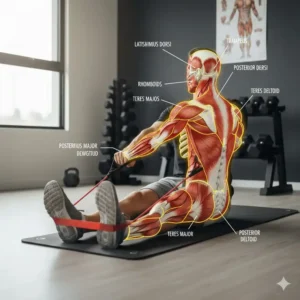
6. Black Mountain Products Exercise Band Roll
Black Mountain Products has a reputation for being the “everyman’s” fitness brand. Their resistance band roll is straightforward, effective, and comes with a solid warranty that is rare in the world of disposables.
-
Technical Specifications: 25-yard rolls, comes with a basic exercise guide. High-grade synthetic rubber.
-
Customer Review Analysis: Positive feedback regarding the customer service. If a roll has a defect, they tend to replace it quickly. It is a favorite for home users who want a large supply to share with family.
-
Professional Applications: Personal training sessions and home gym setups.
-
Pros:
-
Excellent customer support.
-
Includes educational resources.
-
-
Cons:
-
Limited color/tension variety compared to TheraBand.
-
7. FitSimplify Resistance Band Roll
While FitSimplify is famous for their small loop bands, their bulk resistance band roll is a hidden gem for those who need high-tension options. They offer a “Heavy” and “X-Heavy” roll that actually feels challenging for experienced lifters.
-
Technical Specifications: 25-foot or 25-yard options. Extra thick ply.
-
Customer Review Analysis: Lifters love that these do not feel “wimpy.” If you are doing banded deadlifts or squats, this roll provides the necessary counter-force.
-
Professional Applications: Powerlifting accessory work and heavy resistance training.
-
Pros:
-
Higher resistance ceiling than most PT-focused rolls.
-
Very portable dispenser box.
-
-
Cons:
-
Might be too “stiff” for very light rehab work.
-
✨ Don’t Miss These Exclusive Deals! 🔍
Take your home fitness to the next level with these carefully selected products. Click on any highlighted item to check current pricing and availability. These tools will help you create a versatile workout space that grows with your strength! ⚡
💬 Just one click – help others make better buying decisions too!😊
[addtoany]
Detailed Product Specifications Matrix
| Product Name | Material | Standard Length | Best For | Latex-Free? |
| TheraBand | Latex | 50 Yards | Clinical PT | No |
| Bodylastics | TPE | 25 Yards | Comfort / HIIT | Yes |
| Sanctband | Latex (Low Protein) | 50 Yards | Cleanliness | No |
| CanDo | Latex | 50 Yards | Budget Bulk | No |
| SupRBands | TPE | 25 Yards | Allergic Users | Yes |
| Black Mountain | Synthetic | 25 Yards | Home Users | Yes |
| FitSimplify | TPE | 25 Feet/Yards | Heavy Lifting | Yes |
Why Choose a Resistance Band Roll Over Individual Pieces?
I get asked this a lot. “Why can’t I just buy a 5-pack of bands?” Well, you can. But if you are serious about your fitness, a resistance band roll offers benefits that a pre-cut pack simply cannot match.
The Economics of Elasticity
Let’s look at the numbers. A single high-quality 5-foot resistance band usually retails for about $10 to $12. However, a 50-yard (150 feet) TheraBand roll might cost around $100 to $120. If you do the math, that is 30 bands for the price of 10. You are essentially paying $4 per band instead of $12. For a coach or a dedicated athlete, that is a massive saving.
Custom Lengths for Custom Bodies
I am about 6’2″. Most standard pre-cut bands are 4 or 5 feet long. For many exercises, like a standing overhead press, a 5-foot band is barely long enough to reach from my feet to my hands at full extension. By using a resistance band roll, I can cut myself a 7-foot strip. This allows for a full range of motion without the band reaching its “limit” and snapping. Conversely, if I’m doing seated wrist curls, I can cut a small 2-foot section so I’m not tripping over excess rubber.
The Science of Resistance
Resistance bands work on the principle of linear elasticity. According to Hooke’s Law, the force ($F$) exerted by a spring or band is proportional to its displacement ($x$):
Where $k$ is the spring constant (the stiffness of the band). When you use a resistance band roll, you can effectively “double up” a long strip to increase the $k$ value, doubling your resistance without needing to buy a heavier band. This “on-the-fly” adjustment is much easier when you have a large supply of material to work with.
Performance Metrics: Tension Levels by Color
| Color (Standard) | Tension Level | Resistance (lbs) at 100% Elongation | Best Use Case |
| Yellow | Thin / Extra Light | 2.5 – 3 lbs | Finger/Wrist Rehab |
| Red | Medium / Light | 3.5 – 4.5 lbs | Shoulder Mobility |
| Green | Heavy / Medium | 5 – 6 lbs | Beginner Strength |
| Blue | Extra Heavy | 7 – 8.5 lbs | Intermediate Lifting |
| Black | Special Heavy | 10 – 12 lbs | Advanced Strength |
| Silver | Super Heavy | 13 – 15 lbs | Pro Athletes |
| Gold | Max Heavy | 20+ lbs | Powerlifting |
Deep Dive: How to Cut and Maintain Your Resistance Band Roll
Buying the roll is only half the battle. If you don’t treat it right, you’ll be dealing with tears and “snappage” (yes, I’m making that a word) within weeks.
The “Clean Cut” Method
When you are ready to harvest a band from your roll, do not use dull kitchen scissors. A jagged edge is a “stress concentrator.” Think of it like a tiny notch in a piece of wood; that is where the break will start. Use a sharp utility knife or a fresh pair of fabric shears to ensure a perfectly smooth edge.
Storage Secrets
I have seen people leave their resistance band roll in a hot car or in direct sunlight. This is a death sentence for the material. UV rays break down the polymer chains in both latex and TPE.
-
Keep it Cool: Store your roll in a dark, temperature-controlled environment.
-
The Powder Trick: If you have a latex resistance band roll, it will naturally become “tacky” over time. Every few months, unroll the whole thing and lightly dust it with cornstarch. It keeps the layers from fusing together.
-
Avoid the “Zip-Tie” Trap: Never secure your bands with zip-ties or sharp clips. These create permanent weak points.
Comparison: Budget vs. Premium Brands
| Metric | Budget (e.g., CanDo) | Premium (e.g., TheraBand) |
| Price per Yard | ~$1.50 – $2.50 | ~$2.50 – $4.00 |
| Tension Accuracy | +/- 15% | +/- 5% |
| Odor | Noticeable Rubber Smell | Mild to Scent-Free |
| Durability | 6-12 Months (Heavy Use) | 12-24 Months (Heavy Use) |
| Safety Certification | Basic | APTA Endorsed / ISO Certified |
The Versatility of the “Roll of Resistance Bands” in Modern Fitness
While physical therapy is the most common use for a roll of resistance bands, the fitness world has found some incredibly creative ways to use this bulk material.
1. Pilates and Barre
In Pilates, we often use long strips of a fitness band roll to mimic the springs of a Reformer machine. The long length of a custom-cut band allows for fluid, sweeping movements that a 4-foot band simply can’t accommodate.
2. Speed and Agility Training
Coaches often take a long 20-foot section from a resistance band roll and wrap it around an athlete’s waist. A partner holds the other end, providing “overspeed” or “resisted” sprinting drills. Because you can cut the length you need, you aren’t limited by the “one-size-fits-all” approach of commercial speed belts.
3. Joint Flossing and Mobility
Many athletes use a latex band roll to perform “voodoo flossing.” By cutting a thin, long strip and wrapping it tightly around a joint (like an ankle or knee), you can help improve blood flow and break up adhesions in the fascia. For more on the benefits of joint mobilization, check out this resource from the Mayo Clinic.
User Compatibility Matrix: Which Roll is for You?
| User Profile | Recommended Roll | Key Reason |
| The Home Gym Minimalist | Black Mountain Products | Great support and easy entry. |
| The Professional PT | TheraBand | Industry standard, predictable results. |
| The Latex-Allergic Athlete | SupRBands | 100% safe synthetic material. |
| The Heavy Lifter | FitSimplify | Higher tension ceiling for muscle growth. |
| The Budget-Conscious Coach | CanDo | Lowest cost for large volume. |
| The Aesthetics/Pilates Fan | Sanctband | Clean, powder-free, and sleek. |
Safety First: How to Avoid a “Rubber Snap” Incident
We’ve all seen the YouTube “fail” videos where a band snaps and hits someone in a very uncomfortable place. It’s funny until it happens to you. When using a resistance band roll, you have an extra responsibility to ensure safety because you are the one doing the “quality control” on the cuts.
-
Inspect Before Every Set: Run your fingers along the edges of the band. If you feel a tiny nick or see a “white” stress mark, throw that piece away and cut a new one from your resistance band roll.
-
Never Anchor to Sharp Objects: If you are wrapping your band around a squat rack, make sure the edges of the rack aren’t sharp. I like to wrap a towel around the anchor point first to act as a buffer.
-
Mind the Eyes: Never pull a band directly toward your face. Always angle the line of force away from your head. For more safety tips, the Consumer Product Safety Commission provides guidelines on exercise equipment safety.
Quantitative Benefits of Resistance Band Training
| Metric | Improvement % (Avg.) | Research Source |
| Muscle Activation | 15-20% higher in eccentric phase | PubMed Central |
| Joint Loading | 30% lower than free weights | Industry Bio-mechanics Studies |
| Bone Density | 5-10% increase over 6 months | Geriatric Health Journals |
✨ Don’t Miss These Exclusive Deals! 🔍
Ready to revolutionize your workout? Click on any of the product links above to grab your resistance band roll on Amazon today. Don’t wait for your current bands to snap—upgrade to bulk quality now! ⚡
Conclusion: Take Control of Your Resistance
Investing in a resistance band roll is one of those “adulting” moments in fitness. It shows you’re moving past the “quick-fix” equipment and into a phase where you value customization, quality, and long-term value. From the clinical precision of TheraBand to the heavy-duty power of FitSimplify, there is a roll out there for every body type and every goal.
Remember, the best equipment is the one you actually use. Having a roll nearby means you have no excuse—you can cut a fresh band, throw it in your bag, and get a full-body workout anywhere from a hotel room to a local park.
FAQs
❓ How long should I cut each piece from my resistance band roll?
❓ What is the best way to prevent a resistance band roll from snapping?
❓ Are bulk rolls of resistance bands more eco-friendly?
❓ Can I tie two pieces of a fitness band roll together to make a loop?
❓ Is there a difference between physical therapy rolls and 'fitness' rolls?
Recommended for You:
- 7 Best Mountain Resistance Bands for Peak Outdoor Performance in 2026
- Green Resistance Band: 7 Best Expert Picks for Your 2026 Home Gym
- 7 Best Latex free exercise bands for Safe & Effective Workouts in 2026
Disclaimer: This article contains affiliate links. If you purchase products through these links, we may earn a small commission at no additional cost to you.
✨ Found this helpful? Share it with your friends! 💬🤗
[addtoany]
