
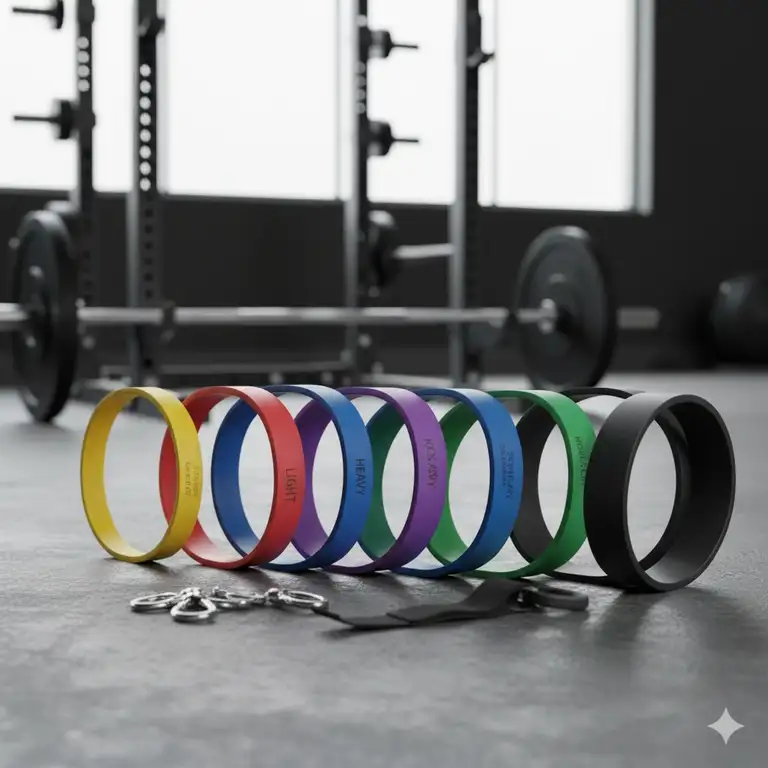
Listen, I’ve been around the powerlifting scene long enough to know that bands aren’t just glorified rubber strings. They’re absolute game-changers when you understand how to use them properly. Whether you’re a seasoned lifter looking to break through a plateau or someone just getting started with resistance training, powerlifting bands deserve a spot in your gym bag.
✨Was this helpful? Spread the word! 🚀
[addtoany]
The thing is, not all bands are created equal. I’ve tested dozens of options over the years—some snapped mid-set (terrifying), others felt like cheap dollar-store toys, and a select few actually delivered on their promises. Today, we’re diving deep into everything you need to know about powerlifting bands, from the science behind accommodating resistance to which specific products will give you the best bang for your buck.
Quick Comparison: Powerlifting Bands vs. Traditional Equipment
| Feature | Powerlifting Bands | Free Weights | Machines |
|---|---|---|---|
| Portability | ✅ Extremely portable | ❌ Heavy & bulky | ❌ Fixed location |
| Cost | ✅ $15-$100 | ⚠️ $200-$2000+ | ❌ $500-$5000+ |
| Space Requirements | ✅ Minimal | ⚠️ Moderate | ❌ Significant |
| Resistance Type | ✅ Variable (accommodating) | ⚠️ Constant | ⚠️ Fixed path |
| Joint Stress | ✅ Lower impact | ⚠️ Moderate-High | ✅ Controlled |
| Versatility | ✅ 50+ exercises | ⚠️ 20-30 exercises | ❌ 1-3 exercises |
| Progressive Overload | ✅ Easily stackable | ✅ Add weight plates | ⚠️ Pin-loaded |
Top 7 Powerlifting Bands: Expert Analysis
1. Gymreapers Resistance Bands (Military Set)
The Gymreapers Military Resistance Band Set has become something of a legend in powerlifting circles, and for good reason. Founded by powerlifters and fitness enthusiasts in 2014, Gymreapers works directly with world record holders and IFBB Pros to refine their products.
Specifications:
- Resistance Levels: Desert Tan (20-35 lbs), OD Green (30-60 lbs), Coyote Brown (40-80 lbs), Black (50-120 lbs), Navy Blue (60-150 lbs)
- Length: 41 inches at full stretch
- Material: Premium natural latex
- Warranty: 1-year replacement guarantee
- What’s Included: 5 bands, drawstring carrying bag
Why It Stands Out:
What sets Gymreapers apart is the direct labeling system—each band has its resistance printed right on it. No more guessing which color corresponds to which weight. The military colorway isn’t just aesthetic either; these bands are genuinely built for tactical athletes and serious powerlifters who need equipment that won’t fail under pressure.
Customer Insights:
With a 5.0-star rating from verified users, people consistently praise the durability. One park athlete noted these bands “help remove a need for the gym and can be used virtually anywhere.” Another lifter with 15 years of band experience called them “the most well built and sturdy bands I’ve used.”
✅ Pros:
- Clear resistance labeling for quick identification
- Military-grade construction
- Lifetime warranty coverage
- Versatile for all fitness levels
- Compact storage solution
❌ Cons:
- Higher price point than budget options
- Limited color variety (military-specific)
- Requires proper anchoring for some exercises
Best For: Serious powerlifters, tactical athletes, and anyone who values durability over aesthetics.
2. Gymreapers Black Set Resistance Bands
The Gymreapers Black Set offers the same exceptional quality as the Military Set but with a sleek, all-black design that some lifters prefer for gym aesthetics.
Specifications:
- Resistance Levels: 20-35 lbs, 30-60 lbs, 40-80 lbs, 50-120 lbs, 60-150 lbs
- Length: 41 inches
- Material: Durable natural latex
- Warranty: 1-year replacement guarantee
- Package: 5 bands with storage bag
The black aesthetic works particularly well if you’re creating content or just prefer a more understated look. Functionally identical to the Military Set, these bands deliver the same world-class performance.
Customer Reviews:
Users love the professional appearance and report these bands maintain their integrity even after intense training sessions. The resistance levels remain consistent over time—a critical factor that cheaper bands often fail to deliver.
✅ Pros:
- Professional all-black appearance
- Same premium quality as Military Set
- Clearly labeled resistance levels
- Excellent customer support
- Great for social media content
❌ Cons:
- Black shows chalk dust more visibly
- Similar price to Military Set
- May blend in with dark gym floors
Best For: Lifters who want top-tier performance with a sleek, professional aesthetic.
3. DRAPER’S STRENGTH Heavy Duty Resistance Bands
DRAPER’S STRENGTH offers an impressive range that spans from rehabilitation-level resistance all the way to serious powerlifting applications. These bands have earned thousands of positive reviews on Amazon for their versatility.
Specifications:
- Resistance Range: 2-200 lbs (widest range available)
- Length: 41 inches
- Material: High-quality latex
- Warranty: 90-day money-back guarantee + limited lifetime warranty
- Bonus: Emailed workout e-guide with every purchase
What Makes Them Special:
The standout feature here is the resistance range. Starting at just 2 pounds means these work for post-injury rehabilitation, while the 200-pound maximum handles even advanced powerlifting applications. You’re essentially getting rehab bands through heavy-duty powerlifting equipment in one purchase.
Real User Experiences:
One reviewer was initially skeptical about the compact size but reported being “AMAZED” at how strong yet portable they were. Another user specifically noted ordering one for their office to do shoulder warm-ups before treating clients. The versatility resonates across different user types.
✅ Pros:
- Widest resistance range available (2-200 lbs)
- Includes workout e-guide
- Lifetime warranty option
- Suitable for rehab through powerlifting
- Compact and lightweight
❌ Cons:
- Some users report inconsistent quality
- Not as thick as some competitors
- May require multiple bands for max resistance
Best For: Users who need versatility—from physical therapy applications to serious strength training.
4. LEEKEY Resistance Band Set
LEEKEY has carved out a reputation for providing quality bands at competitive prices. Their commitment to customer satisfaction includes 24/7 customer service—something you don’t often see at this price point.
Specifications:
- Resistance Levels: Red (15-35 lbs), Black (25-65 lbs), Purple (35-85 lbs), Green (50-125 lbs)
- Dimensions: 81.9 inches × varying widths × 0.18 inches thick
- Material: 100% natural latex from Malaysia
- Features: Non-slip texture design (upgraded)
- Package: 4 bands with storage bag
Performance Characteristics:
The upgraded non-slip checker design provides superior grip and stability during exercises. This matters more than you might think—bands slipping mid-rep can derail an entire set or worse, cause injury. LEEKEY addressed this common complaint with their textured surface.
Customer Feedback:
Users particularly appreciate that these bands can be stretched repeatedly without losing elasticity. The natural latex composition ensures they remain environmentally friendly while delivering consistent performance. Several reviewers mentioned using them successfully for over a year without any degradation.
✅ Pros:
- Non-slip textured design
- Natural rubber from sustainable sources
- Excellent customer service (24/7)
- Cost-effective pricing
- Suitable for powerlifting and general fitness
❌ Cons:
- Only 4 bands (vs 5 in some sets)
- Slightly pricey for the configuration
- Less brand recognition than competitors
Best For: Environmentally-conscious lifters who want quality bands without compromising on grip or customer support.
5. POWER GUIDANCE Pull Up Assist Bands
POWER GUIDANCE targets the sweet spot between quality and affordability. These bands work exceptionally well for pull-up progressions while also functioning as legitimate powerlifting tools.
Specifications:
- Resistance Levels: Red (10-35 lbs), Black (25-65 lbs), Purple (35-85 lbs), Green (50-125 lbs), Blue (65-175 lbs)
- Dimensions: 41 inches long, varying widths
- Material: Natural latex or thermoplastic elastomer (depending on version)
- Warranty: 100% satisfaction guarantee
- Unique Feature: Lightest starting resistance (10 lbs)
Why They Work:
The inclusion of a 10-pound option makes POWER GUIDANCE particularly accessible for beginners or those working on band-assisted exercises. The progression up to 175 pounds means you won’t outgrow these bands quickly.
User Testimonials:
One verified buyer reported increasing their pull-up reps by several within just six workouts. After progressing to the purple band, they noted it was “akin to upping the weight on a barbell.” Another user appreciated the excellent customer service when they needed a replacement—the company sent two bands without requiring a return.
✅ Pros:
- Excellent for pull-up progressions
- Lightest starting resistance available
- Strong customer service reputation
- Stackable for custom resistance
- Travel-friendly design
❌ Cons:
- Some reports of inconsistent thickness
- May require combining bands for max resistance
- Packaging uses excessive plastic
Best For: Those working on pull-up progressions and bodyweight exercises alongside powerlifting movements.
6. WHATAFIT Resistance Bands Set
The WHATAFIT Resistance Bands Set is the people’s champion—with over 34,000 reviews on Amazon and a 4.6-star rating, it’s one of the most popular options available. This is the closest thing to a complete home gym in a bag.
Specifications:
- Tube Band Resistance: Yellow (10 lbs), Blue (20 lbs), Green (30 lbs), Black (40 lbs), Red (50 lbs)
- Length: 48 inches per band
- Material: Natural latex tubes with protective sleeves
- Complete Package: 5 bands, 2 handles, 2 ankle straps, door anchor, waterproof carrying bag, user manual
- Maximum Combined Resistance: 150 lbs
The Complete Package:
What makes WHATAFIT special is the accessories. The cushioned handles, ankle straps, and door anchor transform these from simple bands into a versatile training system. You’re getting everything you need for upper body, lower body, and core training.
Real-World Feedback:
A military fitness trainer reported using these bands to prepare future Air Force Special Warfare candidates, noting they “proved to be more than capable of handling the abuse.” Personal trainers frequently recommend these for clients because of the versatility and value proposition.
✅ Pros:
- Complete accessory package included
- Stackable up to 150 lbs
- Wildly popular with proven track record
- Budget-friendly pricing
- Comes with workout manual
❌ Cons:
- Some reports of bands snapping after months
- Tube design less durable than loop bands
- Handle attachment can be fiddly
- Not ideal for serious powerlifting applications
Best For: Beginners, home gym enthusiasts, and those who want maximum versatility with handles and attachments.
7. Rogue Monster Bands
Rogue Fitness needs no introduction in the powerlifting community. Their Monster Bands represent the gold standard—the bands that serious lifters compare everything else against.
Specifications:
- Resistance Options: 8 color-coded versions
- Length: 41 inches
- Material: Natural latex rubber
- Resistance Range: Varies by width and thickness
- Note: Resistance calculated at 100% stretched length
The Rogue Difference:
These bands are specifically designed for powerlifting applications. Each band’s width and thickness is optimized for particular training goals—from speed work with lighter bands to maximum effort lifts with heavier options. The quality control is exceptional, which explains why they’re a staple in commercial powerlifting gyms worldwide.
Customer Experience:
One long-time user noted the purple band provided perfect assistance for starting pull-ups and dips, while the black band became ideal as strength improved. Multiple reviewers emphasize the confidence these bands inspire—”These feel awesome in the hand and foster confidence with their construction.”
✅ Pros:
- Gold standard in powerlifting community
- Exceptional quality control
- 8 resistance options for precise training
- Used by professional powerlifters
- Excellent for banded squats and benching
❌ Cons:
- Higher individual band prices
- Must purchase multiple bands for variety
- Shipping costs (free on 3+ bands)
- Premium pricing overall
Best For: Serious powerlifters, commercial gym owners, and athletes who demand the absolute best quality.
🎯 Ready to Transform Your Training?
These seven powerlifting bands represent the best options available in 2025. Click on any highlighted product name above to check current prices, read more customer reviews, and see which resistance levels are in stock. Whether you’re building a home gym or supplementing your commercial gym training, these bands deliver results! ⚡
💬 Just one click – help others make better buying decisions too! 😊
[addtoany]
Understanding Powerlifting Bands: More Than Just Rubber
Here’s what most people miss about powerlifting bands: they’re not replacement equipment. They’re enhancement equipment. The technical term is “accommodating resistance,” and it’s fundamentally different from how traditional weights work.
When you squat with a barbell, the weight stays constant throughout the movement. But your strength doesn’t. You’re strongest at the top (lockout position) and weakest in the hole (bottom position). This creates a problem—you can only use as much weight as your weakest point can handle.
The Science of Variable Resistance
Powerlifting bands change this equation entirely. As you stretch the band during the concentric (lifting) phase, the resistance increases. This means:
✅ Lighter resistance at your weakest point
✅ Heavier resistance at your strongest point
✅ Maximum muscle activation throughout the entire range of motion
✅ Improved explosive power and speed strength
According to research published by the National Strength and Conditioning Association, elastic resistance training can significantly improve power output and rate of force development—critical factors for powerlifting performance.
Types of Resistance Bands for Powerlifting
Loop Bands (Closed Loop)
These are the standard powerlifting bands—continuous loops without handles or attachments. They’re what you’ll see in every serious powerlifting gym.
Best Uses:
- Barbell exercises (squats, deadlifts, bench press)
- Pull-up assistance
- Mobility and stretching work
- Speed training
Resistance Range: Typically 15-200 lbs
Tube Bands with Handles
These feature handles attached to elastic tubes. They’re more versatile for general fitness but less common in pure powerlifting applications.
Best Uses:
- Isolation exercises
- Home workouts
- Traveling
- Upper body accessory work
Resistance Range: Usually 10-150 lbs combined
Mini Bands
Small loop bands designed for activation work and smaller muscle groups.
Best Uses:
- Warm-up routines
- Glute activation
- Lateral movements
- Physical therapy
Resistance Range: 5-50 lbs typically
Powerlifting Band Resistance Comparison
| Resistance Level | Color Common | Typical Use | User Level |
|---|---|---|---|
| 10-35 lbs | Red/Yellow | Warm-ups, Stretching, Speed work | Beginners, Mobility work |
| 25-65 lbs | Black | Light assistance, Moderate training | Intermediate, Pull-up progressions |
| 35-85 lbs | Purple | Moderate powerlifting work | Intermediate-Advanced |
| 50-125 lbs | Green | Heavy assistance, Serious training | Advanced lifters |
| 65-175 lbs | Blue | Maximum resistance applications | Elite powerlifters |
Note: Actual resistance depends on stretch percentage and anchoring method
How to Integrate Bands into Powerlifting Training
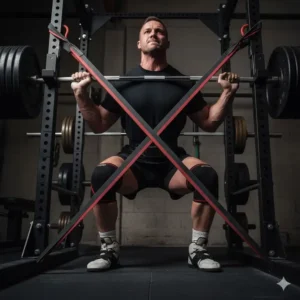
Banded Squats
Setup:
Loop bands around the barbell and anchor them to the bottom of your power rack or heavy dumbbells. The bands should have minimal tension at the bottom of your squat and maximum tension at lockout.
Benefits:
- Teaches explosive hip drive
- Overloads the lockout phase
- Reduces stress at bottom position
- Improves speed out of the hole
Programming Tip: Use 20-30% of your max squat in band tension for dynamic effort days.
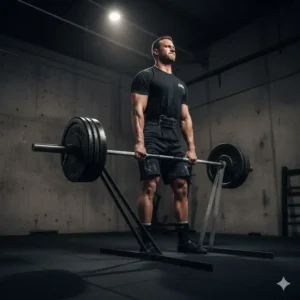
Banded Deadlifts
Setup:
Similar to squats—loop bands around the bar and anchor to the floor. The resistance increases as you approach lockout.
Benefits:
- Strengthens lockout weakness
- Trains hip extension power
- Prepares you for heavier straight weight
- Teaches proper bar path acceleration
Programming Consideration: Start with lighter bands (15-35 lbs tension at top) and progress gradually.
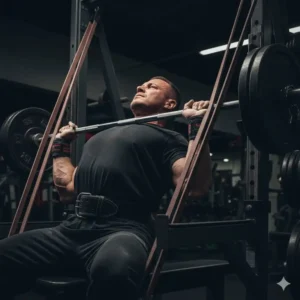
Banded Bench Press
Setup:
Loop bands around the bar, drape over the bench, and anchor underneath or to heavy dumbbells on the floor.
Benefits:
- Overloads tricep lockout
- Trains bar control and stability
- Reduces shoulder stress at bottom
- Improves explosive pressing power
Common Mistake: Using too much band tension too soon—start conservative!
Band-Resisted Speed Work
One of the most valuable applications is speed-strength training. Using 40-60% of your one-rep max plus light band tension (20-40 lbs at top) teaches you to move heavy weight explosively.
Westside Barbell popularized this method, and it’s become a staple for powerlifters worldwide. The key is maintaining maximal bar speed throughout each rep.
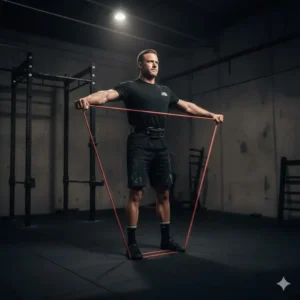
Resistance Training Band Benefits Comparison
| Benefit Category | Powerlifting Bands | Free Weights Only |
|---|---|---|
| Muscle Activation | ✅ Peak at strongest points | ⚠️ Limited at lockouts |
| Explosive Power | ✅ Excellent for speed-strength | ⚠️ Requires plyometrics separately |
| Joint Safety | ✅ Reduced stress at weak points | ❌ Constant load on joints |
| Portability | ✅ Fits in gym bag | ❌ Requires gym access |
| Cost Effectiveness | ✅ $15-100 one-time purchase | ⚠️ $1000+ for full setup |
| Progressive Overload | ✅ Stack bands easily | ✅ Add plates easily |
| Plateau Breaking | ✅ Novel stimulus for adaptation | ⚠️ Limited without variation |
Choosing the Right Resistance Band Thickness
Understanding band thickness helps you select appropriate options for your training goals:
Light Resistance (0.25-0.5 inches thick)
- Tension: 10-35 lbs
- Applications: Warm-ups, mobility, speed work, pull-up assistance for lighter individuals
- Who Needs It: Beginners, those focused on technique, rehabilitation patients
Medium Resistance (0.5-1.3 inches thick)
- Tension: 25-85 lbs
- Applications: General strength training, intermediate powerlifting work, muscle building
- Who Needs It: Intermediate lifters, those progressing from basic bands
Heavy Resistance (1.3-2.5+ inches thick)
- Tension: 50-200 lbs
- Applications: Advanced powerlifting, maximum strength development, experienced lifters
- Who Needs It: Advanced and elite powerlifters, those with established strength bases
Common Powerlifting Band Mistakes to Avoid
Mistake #1: Starting Too Heavy
I see this constantly—lifters grabbing the thickest bands thinking more resistance equals better results. Wrong. Start with lighter bands to learn the movement patterns and bar path adjustments. The variable resistance feels completely different from straight weight.
Mistake #2: Improper Anchoring
Bands not properly secured can become dangerous projectiles. Always double-check your anchors before beginning work sets. If using bands around equipment, ensure they’re wrapped securely and won’t slip mid-lift.
Mistake #3: Neglecting Band Placement
Where you position bands on the bar matters significantly. Small adjustments change the resistance curve. Experiment to find sweet spots for different exercises.
Mistake #4: Ignoring Progressive Overload Principles
Just because bands provide variable resistance doesn’t mean you abandon progressive overload. You still need to systematically increase difficulty over time—add straight weight, use thicker bands, or combine multiple bands.
Mistake #5: Using Damaged Bands
Inspect your bands before every training session. Small tears or worn spots can lead to catastrophic failure. Replace damaged bands immediately—it’s not worth the risk.
Powerlifting Band Terminology Explained
Accommodating Resistance: Resistance that changes throughout a lift’s range of motion, matching your strength curve.
Peak Tension: Maximum resistance at full band stretch, typically occurring at lockout positions.
Band Tension Chart: Reference guide showing resistance at specific stretch percentages (usually provided by manufacturers).
Choked Bands: When you loop a band through itself for anchoring—increases tension and prevents slipping.
Doubled Bands: Using two of the same band together for increased resistance without buying a heavier single band.
Light Day Bands: Thinner bands (15-35 lbs) used on dynamic effort or speed training days.
Heavy Day Bands: Thicker bands (50-125+ lbs) used for maximum effort training or advanced techniques.
Maintenance and Longevity Tips
Quality powerlifting bands aren’t cheap, so proper care extends their lifespan significantly:
Storage Recommendations
✅ Store in cool, dry location
✅ Keep away from direct sunlight
✅ Avoid prolonged contact with oils or solvents
✅ Store flat or loosely coiled
❌ Don’t leave stretched or under tension
❌ Avoid extreme temperatures
Cleaning Protocol
Use mild soap and water to clean bands after particularly chalky or sweaty sessions. Pat dry completely before storing. Never use harsh chemicals or solvents.
Expected Lifespan
With proper care and storage:
- Budget bands: 6-12 months with regular use
- Mid-range brands: 1-3 years
- Premium bands (Rogue, Gymreapers): 3-5+ years
Heavy daily use in commercial gym settings reduces these timelines significantly.
Band Exercises Beyond the Big Three
While squats, benches, and deadlifts get most attention, bands excel at accessory work too:
Banded Good Mornings
Phenomenal for posterior chain development. Loop band around neck, stand on other end. Hinge at hips maintaining neutral spine.
Face Pulls
Anchor band at head height, pull toward face leading with elbows. Incredible for rear delts and rotator cuff health.
Glute Bridges
Band above knees or around thighs, perform bridges. The constant tension builds impressive glute strength.
Band Pull-Aparts
Hold band at arm’s length, pull apart to shoulder-width. Essential for shoulder health and upper back development.
Lateral Band Walks
Mini-band around ankles or above knees, take lateral steps. Activates glute medius like nothing else.
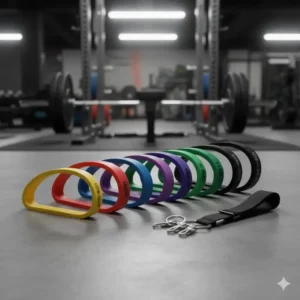
Programming Bands into Your Training Split
Dynamic Effort Day (Westside Template)
Squat Day:
- Banded box squats: 12 sets × 2 reps @ 50% + light bands
- Speed deadlifts: 6 sets × 1 rep @ 60% + mini-band tension
- Accessory work
Bench Day:
- Banded speed bench: 9 sets × 3 reps @ 45% + light bands
- Close-grip board press with bands
- Accessory work
Maximum Effort Day
Use bands on max effort exercises rotation:
- Banded squat to max single
- Banded deadlift with chains
- Banded floor press
Volume/Accessory Work
Integrate bands into:
- Warm-up routines (activation work)
- Isolation exercises (constant tension)
- Stretching and mobility work
Price Range Analysis: What Should You Spend?
| Price Category | Investment | What You Get | Best For |
|---|---|---|---|
| Budget | $15-30 | Basic tube bands or thin loops | Beginners, general fitness |
| Mid-Range | $30-60 | Quality loop bands, 4-5 resistance levels | Serious training, most powerlifters |
| Premium | $60-100+ | Professional grade, multiple bands | Elite lifters, gym owners |
My Recommendation: Start with a mid-range set (like LEEKEY or POWER GUIDANCE) if you’re new to bands. Once you understand how you’ll use them, you can add specialized bands like heavier Rogue Monster Bands or lighter options for specific applications.
Environmental and Safety Considerations
Latex Allergies
If you have latex allergies, look for:
- Thermoplastic elastomer (TPE) bands
- Fabric-wrapped resistance bands
- Rubber-free alternatives
POWER GUIDANCE offers TPE versions that work well for sensitive users.
Environmental Impact
Natural latex bands from sustainable sources (like LEEKEY’s Malaysian rubber) offer better environmental profiles than synthetic alternatives. However, they require proper disposal—don’t just throw them in regular trash.
Safety Equipment
Consider purchasing:
- Band pegs for secure anchoring
- Safety clips for tube bands
- Resistance band hooks
- Protective eyewear (if training alone with heavy bands)
Frequently Overlooked Benefits
Joint Health
The variable resistance profile reduces stress on joints during vulnerable positions. This makes bands particularly valuable for:
- Lifters managing injuries
- Those with previous joint issues
- Older athletes
- Anyone focused on longevity
Travel Convenience
A complete band set weighs maybe 5 pounds and fits in any suitcase. Compare that to convincing TSA you need 45-pound plates in your carry-on.
Deload Training
Bands work brilliantly for deload weeks. The lighter resistance at weak points allows continued training while reducing overall stress.
Neuromuscular Training
The constant tension and need for control improves proprioception and neural drive—valuable adaptations that transfer to straight-weight training.
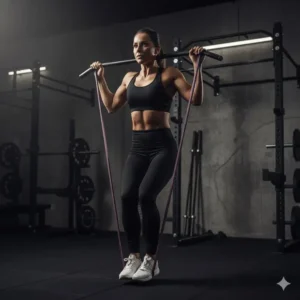
Combining Bands with Other Equipment
Bands + Chains
Advanced method combining two forms of accommodating resistance. The chains add weight as they lift off the ground while bands add tension as you rise. Complex but devastatingly effective for breaking plateaus.
Bands + Blood Flow Restriction
Pairing light band work with BFR produces impressive hypertrophy with minimal loading. Particularly useful during injury recovery or deload periods.
Bands + Tempo Training
Using bands for tempo work (like 5-second eccentrics) creates time under tension that builds massive work capacity.
Real-World Applications: Case Studies
Breaking a Squat Plateau
Scenario: Lifter stuck at 405 lbs squat for 8 weeks.
Solution:
- Added light bands (25-35 lbs top tension) to dynamic effort days
- Incorporated banded good mornings
- Used heavy bands (50-75 lbs) on max effort work
Result: Broke through to 425 lbs within 6 weeks.
Rehab from Shoulder Injury
Scenario: Recovering from rotator cuff strain, can’t press heavy.
Solution:
- Light band face pulls daily
- Band pull-aparts between sets
- Gradually progressed to light banded pressing
Result: Returned to full training within 12 weeks vs. projected 16-20 weeks.
Pull-Up Progression
Scenario: Cannot complete a single unassisted pull-up.
Solution:
- Started with 50-65 lbs assistance band
- Dropped to 35-50 lbs after 3 weeks
- Progressed to 15-35 lbs by week 8
Result: First unassisted pull-up at 10 weeks, 5 consecutive reps by week 14.
The Future of Powerlifting Bands
Technology continues improving band quality:
- Smart Bands: Emerging products with tension sensors providing real-time feedback
- Improved Materials: New latex and synthetic blends offering better durability
- Custom Resistance: Services creating bands with precise resistance specifications
- App Integration: Training programs automatically calculating optimal band setups
Making Your Final Decision
Choosing the right powerlifting bands comes down to:
- Your Training Level
- Beginners → POWER GUIDANCE or WHATAFIT
- Intermediate → LEEKEY or Gymreapers Black Set
- Advanced → Gymreapers Military Set or Rogue Monster Bands
- Your Budget
- Under $30 → WHATAFIT (complete system)
- $30-60 → LEEKEY or POWER GUIDANCE
- $60+ → Gymreapers or Rogue (individual bands)
- Your Primary Application
- General fitness → WHATAFIT (accessories included)
- Serious powerlifting → Gymreapers or Rogue
- Pull-up progressions → POWER GUIDANCE
- Versatility (rehab to max effort) → DRAPER’S STRENGTH
- Your Space Situation
- Home gym → Any option works
- Apartment training → Light to medium bands
- Travel frequently → 2-3 medium bands cover most needs
- Commercial gym → Heavy duty bands for barbell work
🏋️ Transform Your Training Today!
Stop leaving gains on the table! These powerlifting bands offer the variable resistance your muscles have been craving. Whether you’re just starting your powerlifting journey or you’re an experienced lifter looking to break through stubborn plateaus, the right bands make all the difference. Click on any highlighted product above to check current availability and customer reviews—your next PR is waiting! 💪
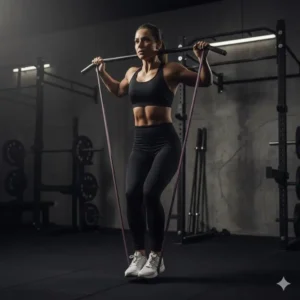
Conclusion
Powerlifting bands represent one of the most underutilized tools in strength training. They’re not replacement equipment—they’re force multipliers that enhance your training in ways straight weight simply cannot match.
The science backs their effectiveness, professional powerlifters swear by them, and the practical benefits (cost, portability, joint health) make them accessible to virtually anyone. Whether you’re using them for speed work, accommodating resistance, or pull-up progressions, quality bands deliver results.
From our testing and research, the Gymreapers Military Resistance Band Set edges out the competition for serious powerlifters, while WHATAFIT provides unbeatable value for those wanting a complete home gym solution. LEEKEY offers the best middle ground with excellent quality at competitive prices.
The question isn’t whether you should add powerlifting bands to your training—it’s which ones you’ll choose and how quickly you’ll start seeing results.
Now get out there and start pulling some heavy weight. Your next PR is waiting, and these bands are going to help you get there.
FAQs
❓ Can powerlifting bands replace free weights completely?
❓ How much resistance do powerlifting bands add at different stretch lengths?
❓ What thickness powerlifting band should beginners start with?
❓ Do powerlifting bands lose tension over time?
❓ Can you combine different resistance bands together safely?
Recommended for You
- Workout Tubes: 7 Best Resistance Options 2025
- 20 lb Resistance Bands: 7 Best Picks That Transform Workouts
Disclaimer: This article contains affiliate links. If you purchase products through these links, we may earn a small commission at no additional cost to you.
✨ Found this helpful? Share it with your friends! 💬🤗
[addtoany]
