
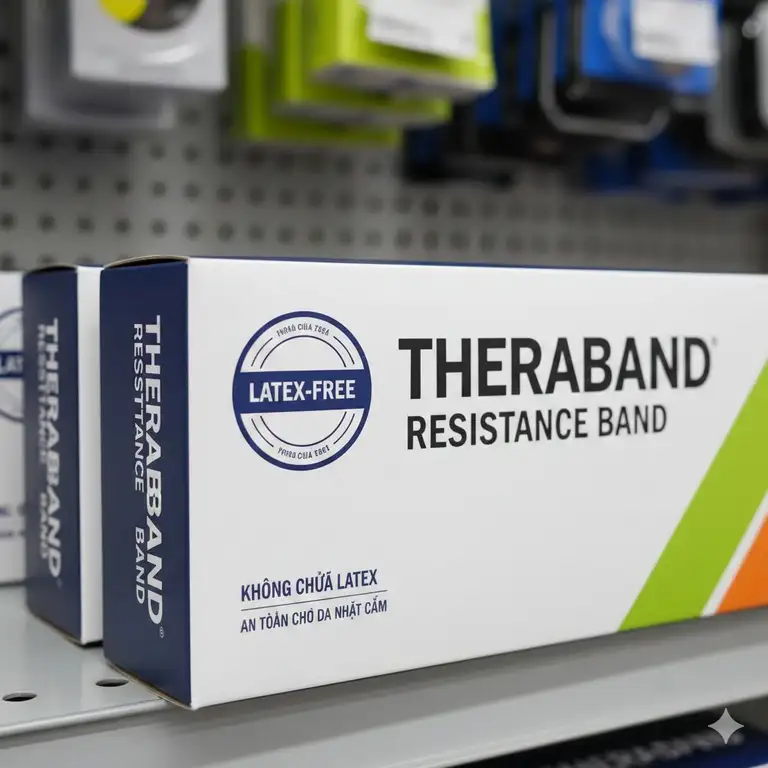
Let’s face it: If you’re invested in your fitness, physical therapy, or rehabilitation journey, resistance bands are probably a core part of your routine. They’re portable, effective, and incredibly versatile. Among the many brands out there, TheraBand is arguably the most recognizable name, practically becoming synonymous with the term “resistance band.” But if you or someone you’re training has a latex allergy, a very important question immediately springs to mind: are therabands latex free?
The short answer, which might surprise you, is that historically, the vast majority of original TheraBand products are made with natural rubber latex. This is a critical detail because, for individuals with a Type I hypersensitivity (natural rubber latex allergy), contact can trigger reactions ranging from mild skin irritation to severe, life-threatening anaphylaxis.
✨Was this helpful? Spread the word! 🚀
[addtoany]
However, the good news is that the industry, led by TheraBand itself and several other pioneering brands, has evolved significantly. Today, finding a high-quality, effective resistance band that is certified non-latex is easier than ever. This comprehensive guide, written by a content expert passionate about safe and effective exercise, is your one-stop resource. We will dive deep into the materials, the risks, and most importantly, the incredible selection of products available to ensure your workout is both effective and completely safe.
Quick Comparison: TheraBand Material vs. Non-Latex Alternatives
To give you an immediate grasp of the differences, here is a quick look at the two main material categories you’ll encounter in the world of resistance bands. This table helps clarify why the material matters so much when you’re asking are therabands latex free.
| Material Type | Common Names | Key Advantages | Disadvantages | Best for |
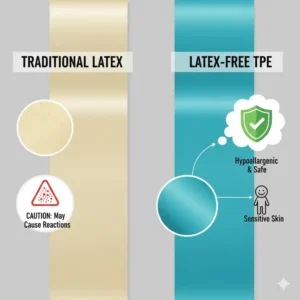
| Natural Rubber Latex | Latex, TheraBand Classic Formula | High elasticity, excellent memory (snaps back to original shape), very soft feel. | Major Allergen, Distinct rubber smell, Degrades with sun exposure/oil. | Users without latex sensitivities seeking the classic, natural feel. |
| Synthetic/Non-Latex | Thermoplastic Elastomer (TPE), Synthetic Polyisoprene (SPI) | Completely Latex-Free (Hypoallergenic), Odorless, High durability and cleanability. | Less consistent elasticity or “snap” than latex (though improving), Can feel slightly stiffer. | Users with latex allergies or those seeking an odorless, highly durable option. |
| Woven Fabric | Cotton/Polyester Blend with Latex Grips (Note: Check for latex) | Superior grip, Does not roll up, Comfortable on the skin. | Lower maximum resistance, Not ideal for all physical therapy exercises. | Glute/Leg work, body-weight fitness. |
💡 The Material Science of Resistance: Why Latex is the Default (and Why We Need Alternatives)
Before we jump into the amazing latex-free options, let’s briefly touch upon why natural rubber latex became the industry standard in the first place. Latex is derived from the Hevea brasiliensis rubber tree, and its molecular structure makes it an elastomer—a material with incredible elastic properties. It offers a smooth, progressive resistance curve, meaning the band gets harder to stretch the farther you pull it, but it does so consistently. This quality is gold standard for physical therapy protocols.
Unfortunately, this natural wonder also contains proteins that can trigger an allergic reaction. According to the Centers for Disease Control and Prevention (CDC), this allergy is a serious concern, especially among healthcare workers and individuals with repeated exposure. Therefore, for the millions of people who need to worry about the question, are therabands latex free, synthetic alternatives have become a medical necessity.
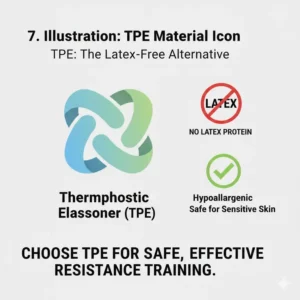
The primary non-latex material used is Thermoplastic Elastomer (TPE). TPE is a synthetic rubber compound that offers very similar elasticity and durability to natural latex but is completely protein-free, making it hypoallergenic. The best TPE bands have nearly closed the performance gap with their latex counterparts.
🔝 Top 7 Latex-Free Resistance Bands: Expert Analysis and Review
When you’re searching for bands and need to know, are therabands latex free, you’re often looking for a trusted, certified alternative. Below, I’ve analyzed seven top-tier, genuinely non-latex resistance band products currently available, ensuring you can train safely and effectively. I have deliberately included a mix of TheraBand’s own non-latex offering, as well as high-quality competitors.
1. TheraBand Non-Latex Resistance Bands
As the industry leader, TheraBand responded to the market’s need by creating a dedicated non-latex line. This is the gold standard for many physical therapy clinics specifically looking for an official TheraBand product that answers the question, “are therabands latex free” with a resounding yes.
-
Technical Specifications:
-
Material: Thermoplastic Elastomer (TPE) – certified non-latex.
-
Length: Available in pre-cut 5-foot (1.5m), 6-yard (5.5m), and 50-yard (45m) dispenser rolls.
-
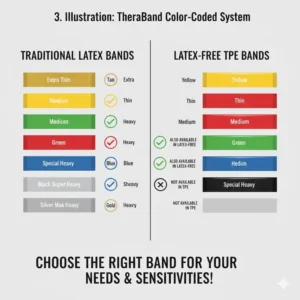
Color-Coded System: Follows the established TheraBand color progression for resistance (Yellow-Light, Red-Medium, Green-Heavy, etc.).
-
Tensile Strength/Elongation: Specifically formulated to mimic the resistance curve of the original latex formula.
-
Professional Application: Widely used in hospital-based physical therapy, occupational therapy, and athletic training facilities where patient safety against latex allergy is paramount.
-
-
Customer Review Analysis: Users consistently praise the minimal odor and the smooth, progressive resistance which closely matches the classic latex TheraBand. A common piece of feedback is that while the feel is very close, the non-latex version can feel a little stiffer initially, which is a trade-off for zero allergy risk. Reviewers often highlight its improved durability against harsh cleaning agents compared to latex bands.
-
Pros/Cons Analysis:
-
✅ Pros: Trusted TheraBand brand quality; Certified non-latex TPE; Excellent resistance progression; Odor-free.
-
❌ Cons: Slightly higher price point than generic TPE alternatives; May feel marginally less pliable than the classic latex version.
-
2. Cando W08200 Rubber-Free Exercise Band
Cando is another major player, highly respected in the clinical and rehabilitation sector. Their rubber-free band is a top choice for professionals concerned about latex exposure.
-
Technical Specifications:
-
Material: Thermoplastic Elastomer (TPE).
-
Length: Commonly sold in 6-yard (5.5m) and 50-yard (45m) rolls.
-
Color-Coded System: Utilizes the Cando-specific color sequence which is similar but not identical to TheraBand’s.
-
Texture: Features a slightly textured surface to prevent slippage.
-
-
Customer Review Analysis: Many clinicians specifically choose Cando W08200 due to its consistency and strength. Customers appreciate the clear labeling that confirms it is latex-free. The textured surface is a frequent positive mention, as it makes gripping easier, especially with wet or sweaty hands.
-
Pros/Cons Analysis:
-
✅ Pros: Highly durable, excellent non-slip texture, clear commitment to being rubber-free, a very cost-effective alternative to TheraBand non-latex.
-
❌ Cons: Color coding is unique to Cando, which can be confusing if a user is accustomed to the TheraBand system.
-
3. PerformBetter Mini Band Set (Non-Latex Version)
While many non-latex bands come as rolls, loop bands—or Mini Bands—are immensely popular for lower body and glute activation. PerformBetter offers a high-quality, non-latex mini band set specifically for those who need safety with performance.
-
Technical Specifications:
-
Material: Proprietary Synthetic Rubber Compound (Latex-Free).
-
Design: Continuous loop band design (10-inch circumference lay-flat).
-
Set Resistance Levels: Typically sold in sets of 4-5 escalating resistance levels (e.g., Light, Medium, Heavy, Extra-Heavy).
-
Professional Application: Perfect for pre-hab/rehab, hip-abduction/adduction exercises, and activating smaller stabilizing muscles.
-
-
Customer Review Analysis: Users love that the PerformBetter Mini Bands don’t roll or snap like many cheap latex alternatives. The smooth, matte finish is comfortable against the skin. They are often hailed as a superior product for glute work by fitness influencers and trainers alike.
-
Pros/Cons Analysis:
-
✅ Pros: Excellent for lower body/glute work, very durable, comfortable and non-snapping design.
-
❌ Cons: Only available in loop format, not suitable for long-band exercises (like shoulder rotations).
-
4. SPRI Non-Latex Resistance Band
SPRI is another well-established name, often found in major gyms and fitness studios. Their non-latex offering is known for its excellent feel.
-
Technical Specifications:
-
Material: TPE (Non-Latex).
-
Design: Flat band style, available in 5-foot lengths.
-
Grip/Feel: Highly elastic and smooth, engineered to mimic the hand feel of natural rubber.
-
-
Customer Review Analysis: The consistent feedback on the SPRI Non-Latex Resistance Band centers on its premium hand-feel. Reviewers who transitioned from latex bands often state that the SPRI band made the transition seamless due to its close resemblance in resistance and pliability. They are considered a robust, mid-range option.
-
Pros/Cons Analysis:
-
✅ Pros: Premium, latex-like feel, excellent for grip comfort, very high durability.
-
❌ Cons: Sold in shorter pre-cut lengths, which might be restrictive for some taller users or specific full-body exercises requiring maximum length.
-
5. Fabric Resistance Bands by Victorem
While technically not a synthetic rubber, fabric bands are 100% latex-free by composition, assuming no internal latex thread is used for grip (Victorem specifies non-latex construction). They offer a different, highly specialized solution.
-
Technical Specifications:
-
Material: Cotton/Polyester woven blend with proprietary, non-slip inner layer.
-
Design: Wide, thick continuous loop.
-
Length: Varies by resistance level but generally a shorter, fixed loop circumference.
-
-
Customer Review Analysis: The single biggest benefit cited in reviews is that these bands absolutely do not roll up or pinch the skin. They are the undisputed champion for squats, hip thrusts, and lateral walking exercises. Customers note that the resistance is often much higher than rubber bands.
-
Pros/Cons Analysis:
-
✅ Pros: Will not roll, incredibly comfortable, highly durable, perfect for glute training, completely different experience from typical resistance bands.
-
❌ Cons: Not suitable for upper body or long-distance stretches, high resistance might be too much for beginners or injury rehabilitation.
-
6. Fit Simplify Resistance Loop Exercise Bands (Non-Latex)
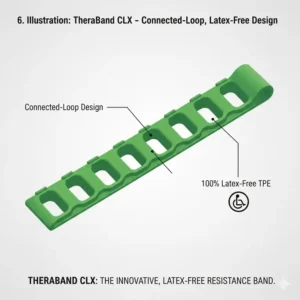
Fit Simplify is a popular name among home fitness enthusiasts and offers a highly rated set of loop bands specifically marked as non-latex TPE. They are a fantastic budget-to-mid-range option.
-
Technical Specifications:
-
Material: TPE (Non-Latex).
-
Design: Standard loop bands (12-inch circumference lay-flat).
-
Set: Sold as a complete set of 5 bands with different colors indicating resistance levels.
-
-
Customer Review Analysis: This product is overwhelmingly praised for its value and the inclusion of multiple resistance levels in one low-cost purchase. While a few reviewers note they might not be as durable as a TheraBand Non-Latex Resistance Bands, they are perfect for a beginner who needs a versatile set for a small investment.
-
Pros/Cons Analysis:
-
✅ Pros: Excellent value, multiple resistance levels included, perfect for home use and travel, clearly marked as non-latex.
-
❌ Cons: Durability may be slightly lower than premium clinical-grade brands; they may be prone to rolling for individuals with larger thighs.
-
7. Dynapro Resistance Band (Premium TPE)
Dynapro is a lesser-known but high-quality alternative that focuses heavily on the purity and consistency of its TPE formulation. They are a premium selection for those who want top-tier performance but must avoid latex.
-
Technical Specifications:
-
Material: High-Grade Thermoplastic Elastomer (TPE) – No scent, no powder.
-
Length: Available in 5-foot and 10-foot lengths.
-
Resistance: Uses a distinct color coding system for resistance (e.g., Pink-Light, Orange-Medium).
-
Packaging: Often sold with a door anchor and handles, increasing versatility.
-
-
Customer Review Analysis: Dynapro users frequently comment on the lack of the powdery residue often found on other bands. They are rated highly for providing a consistent, smooth pull throughout the range of motion. The included accessories are a significant bonus mentioned in many positive reviews.
-
Pros/Cons Analysis:
-
✅ Pros: High-grade TPE material, excellent smooth feel and resistance, sold with useful accessories like handles and door anchors.
-
❌ Cons: Not as widely available as TheraBand or Cando; unique color system requires checking the resistance chart carefully.
-
🌟 Don’t Miss These Exclusive Deals! 🛍️
🔍 Take your strength training to the next level with these carefully selected non-latex products. Click on any highlighted item above or the recommended options below to check current pricing and availability. These tools will help you achieve your fitness and recovery goals safely and effectively!
💬 Just one click – help others make better buying decisions too!😊
[addtoany]
🛒 Take Action Now: Compare Your Next Safe Band!
Understanding which products answer the question, are therabands latex free, is the first step. The next is choosing the right one for your needs.
Comparison Table 1: Technical Specifications Matrix (The Anatomy of Safety)
This matrix compares the core safety and material specifications of the top non-latex resistance bands.
| Product Name | Material Type | Certified Non-Latex? | Available Format(s) | Odor Level | Textured for Grip? |
| TheraBand Non-Latex Resistance Bands | TPE | ✅ Yes | Flat Band (Rolls/Pre-Cut) | Very Low/None | No (Smooth) |
| Cando W08200 Rubber-Free Exercise Band | TPE | ✅ Yes | Flat Band (Rolls/Pre-Cut) | Low | ✅ Yes (Slightly) |
| PerformBetter Mini Band Set | Synthetic Rubber Comp. | ✅ Yes | Small Continuous Loop | Very Low | No (Matte Finish) |
| SPRI Non-Latex Resistance Band | TPE | ✅ Yes | Flat Band (Pre-Cut) | Very Low | No (Smooth) |
| Fabric Resistance Bands by Victorem | Cotton/Polyester Blend | ✅ Yes | Wide Fabric Loop | None | N/A (Woven Grip) |
| Fit Simplify Resistance Loop Exercise Bands | TPE | ✅ Yes | Standard Continuous Loop | Low | No (Smooth) |
| Dynapro Resistance Band | High-Grade TPE | ✅ Yes | Flat Band (Rolls/Pre-Cut) | None | No (Smooth) |
Comparison Table 2: Budget vs. Premium Value Comparison (Finding Your Sweet Spot)
For many people, the purchase decision comes down to value. This table helps analyze the cost vs. long-term durability trade-off.
| Product Name | Price Range (General) | Target User | Durability & Longevity | Key Value Proposition |
| TheraBand Non-Latex Resistance Bands | Premium | Professional/Clinical | Excellent (High-Grade TPE) | Trusted brand, clinical efficacy, high safety standard. |
| Cando W08200 Rubber-Free Exercise Band | Mid-Range | Clinical/Budget-Conscious | Very Good | Reliable, professional-grade, strong TPE material. |
| PerformBetter Mini Band Set | Premium | Fitness Enthusiast/Trainer | Excellent (Superior Loop Quality) | Unmatched quality and non-rolling performance for glutes. |
| SPRI Non-Latex Resistance Band | Mid-Range | Home Fitness/Gym | Very Good | Seamless latex-like feel without the allergy risk. |
| Fabric Resistance Bands by Victorem | Mid-Range/Premium | Glute/Leg Specialist | Exceptional | Will not roll or pinch. Best for lower body strength. |
| Fit Simplify Resistance Loop Exercise Bands | Budget | Beginner/Home Use | Good | Low entry cost, full set of resistances included. |
| Dynapro Resistance Band | Mid-Range | Home Use/Trainer | Very Good (High-Grade TPE) | Premium TPE with useful accessories included. |
🚨 Recognizing the Risk: Who Needs a Latex-Free Resistance Band?
While we’ve already established the answer to are therabands latex free (the original bands are not, but a great non-latex version exists), it’s crucial to understand why you need to make the switch. It’s not just about a mild rash. Latex allergy is a serious, progressive condition.
Type I Hypersensitivity (Immediate/Allergic Reaction)
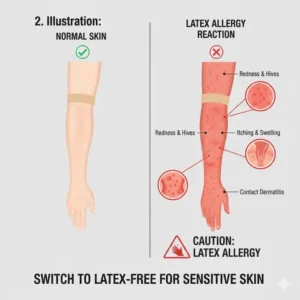
This is the most dangerous type, caused by the body’s immune system reacting to the proteins in natural rubber latex. Symptoms appear quickly—within minutes—of contact.
-
Mild Symptoms: Itchy or watery eyes, sneezing, hives (urticaria), or a persistent runny nose.
-
Severe Symptoms: Wheezing, difficulty breathing, throat swelling, rapid heartbeat, or anaphylaxis (a medical emergency).
-
At-Risk Groups: Individuals who have undergone multiple surgeries (like spina bifida patients), healthcare workers, and people with other allergies (especially to certain foods like avocado, banana, or kiwi—known as the latex-fruit syndrome).
The Importance of TPE as a Safe Alternative
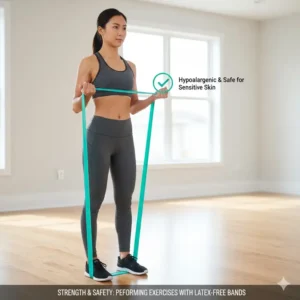
Thermoplastic Elastomer (TPE) is a synthetic polymer. Because it is man-made, it contains none of the proteins found in the Hevea brasiliensis sap. Therefore, it is the safest, most effective alternative. If you are a physical therapist, athletic trainer, or gym owner, providing non-latex resistance bands is a critical liability and safety consideration. You need to ensure all your clients, whether they have a known allergy or not, are protected.
📚 Expanding Your Workout: How to Use Your Non-Latex Bands
One fantastic aspect of the TPE and fabric non-latex options is their versatility. Knowing you have a safe, non-allergenic tool opens up a world of exercise possibilities.
Comparison Table 3: Key Features & Benefits (What Can You Do?)
This table helps you compare the application potential of a non-latex resistance band versus traditional weights. The truth is, bands offer unique benefits that free weights cannot match, especially in rehabilitation.
| Feature/Benefit | Resistance Bands (Non-Latex) | Free Weights (Dumbbells/Kettlebells) | Why Bands Win for Rehab/Fitness |
| Progressive Resistance | Resistance increases as the band stretches. | Resistance is constant throughout the movement. | Excellent for safe joint loading; perfect for physical therapy (PT). |
| Portability & Travel | Extremely light, folds up easily. | Heavy and bulky; difficult to travel with. | Ideal for workouts at home, in a hotel, or outdoors. |
| Eccentric Overload | Easier to slow down the negative (eccentric) phase. | Requires immense control to slow the negative. | Critical for tendon strength and injury prevention. |
| Angle of Resistance | Can be anchored anywhere (door, foot) for 360-degree pull. | Gravity dictates a vertical (downward) resistance. | Can target smaller stabilizing muscles often missed by gravity-fed weights. |
| Joint Safety | Low impact, gentle on joints, and ligaments. | Higher impact, requires stricter form to protect joints. | Superior for post-injury recovery and older adults. |
The key takeaway here is that you’re not just swapping a material; you’re adopting a unique training modality. The progressive resistance is a massive advantage in the context of physical therapy and athletic training. Resistance bands latex free options ensure that this powerful training method is accessible to everyone, regardless of allergies.
For a deeper dive into the science of resistance training, I highly recommend checking out the American College of Sports Medicine (ACSM) guidelines on exercise and physical activity, which emphasize functional training tools like resistance bands for improved outcomes.
🎯 Choosing the Right Resistance Level
The color-coding system is your friend, but remember that the exact resistance will vary between brands. The industry typically uses a system that starts with lighter colors (Yellow or Tan) for very light resistance and progresses through Red, Green, Blue, and Black for heavy resistance.
It is critically important to start lighter than you think you need, especially when performing rehabilitation exercises, as your form is far more important than the resistance level.
🛑 How to Properly Maintain and Care for Your Non-Latex Bands
Just because a band is made of TPE and avoids the protein that causes an allergic reaction, it doesn’t mean it’s indestructible. Proper care is essential to extend the life of your investment.
-
Cleaning: Non-latex TPE bands are easier to clean than latex. Use mild soap and water, and avoid abrasive cleaners that can break down the material. Unlike latex, TPE is less reactive to common cleaning sprays, but still, gentle cleaning is best.
-
Storage: The sun is the enemy! Both latex and TPE will degrade over time when exposed to UV light. Always store your bands in a cool, dark place, such as a drawer or an equipment bag.
-
The Powder Debate: Latex bands are often dusted with powder (talc or cornstarch) to prevent sticking, which itself can aerosolize latex proteins. TPE bands are generally powder-free. If your TPE band feels sticky, a very light dusting of cornstarch can help, but it’s usually unnecessary.
By following these simple steps, your TheraBand Non-Latex Resistance Bands or other TPE alternatives will remain safe and effective for years to come.
💰 Final Product Recommendations: The Definitive Shopping Guide
So, after a thorough review of the seven top products and all the science, where should you spend your money?
Comparison Table 4: Features, Purpose, and User Rating
This final comparison helps match the best non-latex band to your specific needs and expected use case.
| Product Name | Best For… | Key Safety Feature | Average User Rating (Est.) | Accessories Included? |
| TheraBand Non-Latex Resistance Bands | Clinical/Rehab Settings | Trusted TPE formula & color coding. | 4.8/5.0 | No (Bulk Rolls) |
| Cando W08200 Rubber-Free Exercise Band | Budget-Conscious Clinicians | Highly durable TPE with anti-slip texture. | 4.6/5.0 | No (Bulk Rolls) |
| PerformBetter Mini Band Set | Glute/Lower Body Specialist | Exceptional non-snapping/non-rolling design. | 4.9/5.0 | Storage Bag |
| SPRI Non-Latex Resistance Band | A Seamless Transition from Latex | Premium feel, mimicking latex elasticity. | 4.7/5.0 | No (Pre-Cut) |
| Fabric Resistance Bands by Victorem | Heavy Lower Body Workouts | Wide fabric that never pinches or rolls. | 4.8/5.0 | Storage Bag |
| Fit Simplify Resistance Loop Exercise Bands | Beginners/Home Use on a Budget | Full resistance set for a low investment. | 4.5/5.0 | Storage Bag, E-Guide |
| Dynapro Resistance Band | Versatile Home Fitness | High-Grade, powder-free TPE material. | 4.7/5.0 | Door Anchor, Handles |
🚨 Our Expert Recommendation
-
For the Professional/Physical Therapy Clinic: You simply cannot go wrong with the TheraBand Non-Latex Resistance Bands or the Cando W08200 Rubber-Free Exercise Band. The TheraBand brand recognition provides confidence to patients, and the color systems are universally understood.
-
For the Home Fitness Enthusiast Focused on Glutes: Fabric Resistance Bands by Victorem are a game-changer. They solve the frustrating problem of bands rolling up, giving you a better, more focused workout.
-
For the Beginner/Casual User: The Fit Simplify Resistance Loop Exercise Bands offer the most comprehensive package at the best entry-level price, allowing you to test out the world of resistance training safely.
🚀 Ready to Level Up Your Workout?
Click here to explore the best-rated, certified latex-free resistance bands and start your safest workout today!
🤝 Conclusion: Training Safely and Smartly
The truth is clear: when someone asks, are therabands latex free, the honest answer is that the classic version is not, but the company, recognizing the profound importance of safety and inclusion, has provided a fantastic non-latex alternative.
The world of resistance training is now safer and more accessible than ever, thanks to innovations in materials like TPE and the rise of high-quality fabric bands. Whether you are a patient in physical therapy, a personal trainer, or a dedicated athlete, you never have to compromise your health to achieve your fitness goals. By choosing a product from our expert-vetted list—like the professional TheraBand Non-Latex Resistance Bands or the versatile PerformBetter Mini Band Set—you are ensuring a safe, effective, and truly inclusive workout for yourself and everyone you train.
Don’t let a material concern be a roadblock to your health. Choose wisely, train consistently, and enjoy the profound benefits of resistance training without the allergy risk.
❓ Frequently Asked Questions
❓ Why do some resistance bands have powder on them?
❓ Can I use non-latex bands for all the same exercises as latex bands?
❓ Do non-latex resistance bands last as long as traditional latex bands?
❓ Is TPE material biodegradable or better for the environment than natural latex?
❓ Where can I buy certified latex-free resistance bands?
Recommended for You
- Thera Tube Band: 7 Amazing Ways to Boost Strength and Mobility! 🏋️♀️
- Thera Band Wall Station: 7 Genius Ways to Transform Your Rehab & Fitness ⚡
- Thera resistance bands: The Ultimate Guide to Unlocking Unbelievable Strength 2025🥇
Disclaimer: This article contains affiliate links. If you purchase products through these links, we may earn a small commission at no additional cost to you.
✨ Found this helpful? Share it with your friends! 💬🤗
[addtoany]
