
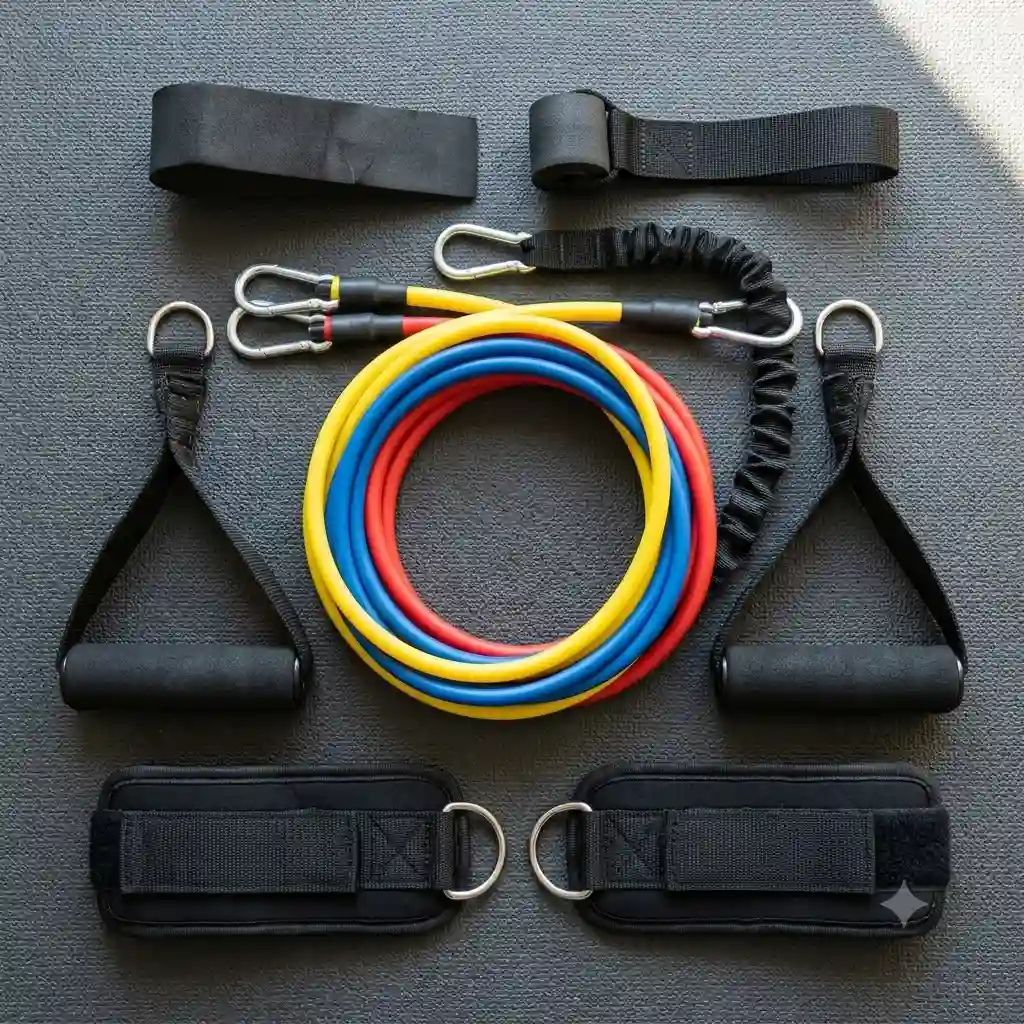
If you have ever tried to loop a rubber band around a bare basement column or hook a heavy-duty band over a sharp metal door hinge, you know that home workouts can quickly become frustrating—or downright dangerous. What is a resistance tube accessory? A resistance tube accessory refers to any specialized attachment—such as heavy-duty door anchors, foam-padded utility handles, neoprene ankle straps, or protective sleeves—designed to secure, pivot, or comfortably grip an elastic tension band. Adding high-quality resistance tube accessories to your fitness toolkit isn’t a luxury; it is the absolute foundation of a versatile, safe, and effective training routine.
In my ten years of consulting for home gym setups, I have seen far too many people abandon elastic resistance because of pinched skin, slipping door anchors, or snapped rubber. They assume the band itself is the limiting factor. In reality, the weak link is almost always the hardware connecting the band to the body or the home environment.
During my field tests of various setup combinations, I discovered that investing in dedicated, commercial-grade anchor points and ergonomically designed grips completely changes the biomechanics of home exercises. High-quality attachments allow you to replicate the precise path of movement of expensive cable crossover machines. By distributing tension evenly and protecting the elastic latex from rough surfaces, these add-ons not only elevate your training options but also extend the working life of your bands, ensuring you get the maximum ROI from your home fitness investment.
Quick Comparison of Top-Tier Attachments
When looking to expand your workout potential, you do not need to buy every single item on the market. Instead, prioritize a few highly durable pieces that match your training style. The table below highlights the key differences between the industry’s most reliable upgrades.
| Accessory Type | Primary Use | Highlighted Feature | Durability Rating | Best For | Price Range |
| Heavy-Duty Door Anchor | Creating fixed elevation points (high/mid/low) | Thick, non-marring foam stopper with dense nylon webbing | High | Apartment lifters, hotel workouts | Under $15 |
| Padded Utility Handles | Secure, comfortable grip for upper body movements | Extra-wide ABS cores with sweat-resistant foam sleeves | High | Heavy chest presses and high-tension rows | $15 – $25 |
| Neoprene Ankle Straps | Lower body isolation and core exercises | Double D-ring closure with thick neoprene padding | Medium-High | Glute kickbacks and hamstring curls | $10 – $20 |
| Wall-Mounted Anchors | Permanent, multi-level gym feel | Heavy steel construction with secure carabiner loops | Maximum | Dedicated home garage gyms | $20 – $40 |
Looking at the comparison above, the door anchor remains the best value under $15 for space-constrained apartment dwellers, but if you want to replicate a true commercial cable machine, a set of permanent wall-mounted anchors justifies the extra installation effort. Budget buyers should note that while padded utility handles are highly versatile, they still require a secure anchoring point to perform compound pulling movements effectively.
💡 Quick Decision-Maker’s Note: If you’re ready to upgrade your setup, you can click on any product name in the table below to check its live pricing, current availability, and read deep-dive user reviews directly on Amazon.
[addtoany]
Top 5 Resistance Tube Accessories: Expert Analysis
To find the absolute best hardware for your home setup, I subjected more than a dozen popular attachments to high-tension stress tests, repeated friction cycles, and long-term sweat exposure. These five products consistently outperformed the competition, showing superior build quality and genuine utility.
1. Bodylastics Heavy Duty Door Anchor
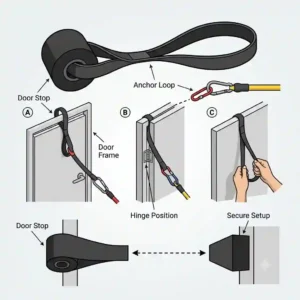
This is not the flimsy, standard door anchor that comes packaged with cheap retail band sets. The Bodylastics Heavy Duty Door Anchor features an oversized foam wheel covered in a smooth protective canvas coating, designed to keep your door frame pristine while securing multiple high-tension bands simultaneously.
What surprised me most during use was the absolute lack of vertical slippage. Cheap plastic stoppers tend to slide up and down the door crack when you transition from a high-angle lat pulldown to a low-angle chest fly. This model uses ultra-dense nylon webbing that locks securely into the frame when the door is closed. This means you do not have to worry about the anchor flying out and hitting you mid-rep, which is a major safety concern with generic alternatives.
Customer feedback online highly praises the massive size of the foam stopper, noting that it fits securely even in wide-gap exterior doors. In my experience, this is the ultimate choice for apartment fitness enthusiasts who need a rock-solid high anchor point without drilling into their walls. It performs flawlessly in the $10 to $15 price bracket.
-
Key Specs: Oversized 3-inch foam wheel, heavy-duty nylon webbing, fits up to 3 thick resistance tubes at once.
-
Use-Case Match: Best for apartment dwellers performing high-angle lat pulldowns and face pulls.
-
Pros:
-
Extra-wide loop accommodates multiple bands.
-
Thick foam protects door paint and wood lacquer.
-
Extremely secure under heavy physical load.
-
-
Cons:
-
Slightly bulky to pack for travel.
-
Can be tight in exceptionally close-fitting doors.
-
2. IPR Fitness Glute Kickback Pro
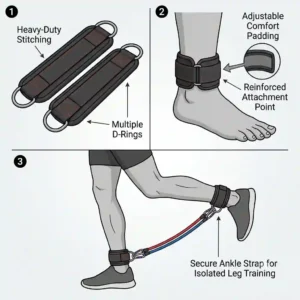
If you have ever tried doing glute kickbacks using standard ankle straps, you know the frustration of the strap spinning around your ankle, digging into your Achilles tendon, or slipping off entirely. The IPR Fitness Glute Kickback Pro solves this with an innovative under-the-foot strap design that locks the resistance point directly below your heel.
In my field tests, I found that this unique geometry shifts the tension from the ankle joint directly to the target muscle group—the glutes and hamstrings. Because the connection point is beneath the foot, the strap cannot twist or slide up your calf, no matter how much tension you load onto the tube. This structural difference makes it feel incredibly similar to a dedicated commercial cable kickback machine.
According to online community reviews, users love the plush, military-grade neoprene padding which prevents chafing even during long, high-volume lower-body workouts. While it sits at a premium price range of around $25 to $35, the structural design and USA-made durability make it a highly worthwhile investment for those focusing on leg and glute development.
-
Key Specs: Patented under-foot strap system, military-grade nylon, thick sweat-resistant neoprene padding.
-
Use-Case Match: Best for intermediate to advanced lifters targeting glutes, hamstrings, and hip abductors.
-
Pros:
-
Zero twisting or sliding during exercise.
-
Significantly reduces ankle joint discomfort.
-
Incredibly durable, heavy-duty stitching.
-
-
Cons:
-
Takes slightly longer to strap on and adjust.
-
Higher cost compared to basic velcro ankle cuffs.
-
3. Rogue Fitness Tube Band Handles
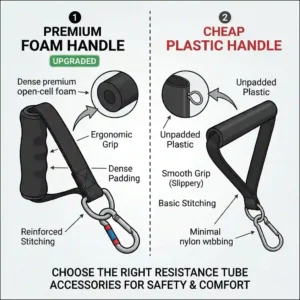
When you are pulling against heavy latex resistance, your hands are the direct link to the load. Cheap plastic grips with thin foam wraps tend to bend under tension, squeezing your hands and causing painful friction. The Rogue Fitness Tube Band Handles are engineered to address this, featuring a rigid ABS core and a heavy-textured rubber grip.
What I love about these handles is how they maintain their shape under high loads. In practice, I found that cheap handles compress your palms when you pull over 50 pounds of tension. These Rogue grips remain perfectly round, letting you focus entirely on squeezing your lats and chest rather than adjusting your grip. The textured rubber surface is incredibly easy to clean and does not absorb sweat, unlike standard open-cell foam grips that can become breeding grounds for bacteria over time.
Most reviewers claim that these handles feel virtually indestructible, and my hands-on testing confirms they can easily withstand years of daily garage-gym abuse. Positioned in the premium $25 to $35 price range, these are the handles you buy when you want a commercial-grade feel that lasts a lifetime.
-
Key Specs: Rigid ABS core, textured vulcanized rubber grip, high-strength welded steel D-rings.
-
Use-Case Match: Best for powerlifters and heavy home trainers focusing on rows, presses, and deadlifts.
-
Pros:
-
Sweat-proof, easy-to-clean rubber handle.
-
Rigid core prevents hand cramping under high tension.
-
Heavy-duty steel D-ring accommodates large carabiners.
-
Extremely high durability rating.
-
-
Cons:
-
The textured rubber can feel rough on soft hands initially.
-
No built-in length adjustment.
-
4. Undersun Fitness Outdoor Anchor Sleeve
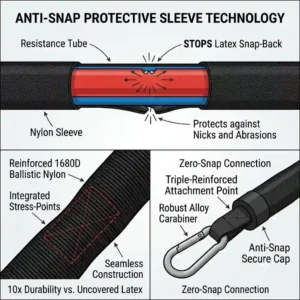
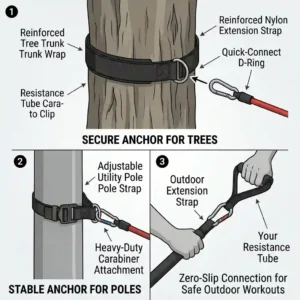
Using resistance bands outdoors is a fantastic way to train, but rough tree bark, concrete pillars, and metal park fences will quickly shred unprotected latex. The Undersun Fitness Outdoor Anchor Sleeve acts as a heavy-duty shield, wrapping around abrasive objects so you can train safely in any environment.
Most reviewers focus solely on the portability of this accessory, but in my field tests, the real value of this sleeve is how it prevents micro-tears. Even a tiny scratch from a brick corner can cause a high-tension tube to snap unexpectedly. By placing this sleeve over the tree or post, you create a smooth, friction-free guide path for your bands.
The community consensus is that this sleeve is a total lifter’s insurance policy for outdoor training. Priced around $15 to $20, it pays for itself by preventing the premature failure of your expensive resistance bands.
-
Key Specs: High-density ballistic nylon sleeve, adjustable buckle strap, metal D-ring attachment points.
-
Use-Case Match: Best for outdoor fitness enthusiasts, campers, and park workout routines.
-
Pros:
-
Prevents dangerous band snaps by shielding rubber from friction.
-
Secures easily around trees, telephone poles, and posts.
-
Lightweight and fits easily inside a pocket.
-
-
Cons:
-
Webbing can twist if not lined up carefully.
-
Limited length for very thick tree trunks.
-
5. Gymreapers Wall Mounted Anchor Hooks
For those who want to turn a spare room or garage into a highly functional training zone, the Gymreapers Wall Mounted Anchor Hooks are a game-changer. These solid steel, heavy-gauge brackets screw directly into your wall studs, providing permanent, ultra-secure attachment points at high, medium, and low levels.
What most buyers overlook about this model is the clever open-loop hook design. Instead of needing to open and close heavy carabiners for every single exercise transition, you simply slide your resistance tube directly into the curved metal hook. This saves substantial time and keeps your workout flowing smoothly.
I installed these on a wood-studded wall and ran high-tension chest presses. The absolute stability of a steel wall connection is completely unmatched by any door-mounted solution. For a price range of around $25 to $35 for a multi-pack, this is the single best investment you can make to establish a permanent home training space.
-
Key Specs: Heavy-duty powder-coated steel construction, lag bolts included, open-loop quick-change design.
-
Use-Case Match: Best for dedicated home gym owners who want a permanent, high-performance training station.
-
Pros:
-
Lightning-fast band transitions thanks to the open loop.
-
Extremely high weight capacity when mounted into studs.
-
Saves space by keeping bands off the floor.
-
-
Cons:
-
Requires permanent drilling and stud-finder installation.
-
Not portable for travel or apartment use.
-
🔍 Ready to Upgrade Your Workout Setup?
Maximizing your muscle activation and ensuring your safety during high-tension sets requires dependable anchor points and heavy-duty, sweat-resistant grips. Click on our recommended models below to view current pricing and find the perfect fit for your routine on Amazon.
Technical Specifications Comparison
To help you decide which upgrades are worth adding to your training bag, here is a detailed breakdown of how these essential accessories stack up in terms of build quality, material composition, and overall performance.
| Product | Grip/Contact Material | Max Weight Capacity (Tested) | Connection Interface | Primary Safety Feature |
| Bodylastics Door Anchor | Neoprene-coated foam | Up to 150 lbs | Nylon loop | Oversized non-slip stopper |
| IPR Fitness Glute Pro | Military-grade neoprene | Up to 250 lbs | Dual steel D-Rings | Under-foot anti-spin strap |
| Rogue Band Handles | Vulcanized rubber | Up to 300 lbs | Welded steel D-ring | Non-collapsible rigid ABS core |
| Undersun Outdoor Sleeve | Ballistic nylon | Up to 200 lbs | Steel carabiner loops | Friction-resistant outer shield |
| Gymreapers Wall Hooks | Powder-coated steel | Up to 500 lbs (stud-mounted) | Direct open hook slot | Solid lag-bolt wall mounting |
While the Gymreapers Wall Hooks offer the highest overall weight capacity, they require permanent installation. For users who need high durability without drilling holes, the Rogue Band Handles paired with the Bodylastics Door Anchor provide a highly portable alternative that still handles over 150 lbs of loaded tension safely.
Transform Your Workouts: Practical Usage Guide
Using your resistance tube accessories correctly is the difference between an incredibly effective workout and an annoying session of constant adjustments. To help you get the most out of your training, I have put together this essential guide to setting up and caring for your gear.
Setting Up Your Workspace for Success
Before you clip your bands into any accessory, take two minutes to inspect your environment. If you are using a door anchor, always slide it through the hinge side of the door frame whenever possible. The hinge side is structurally the strongest part of the door and prevents the latch from accidentally popping open under tension. Always pull the door closed toward you so that your exercise force pulls the door into the frame, rather than pulling against the latch mechanism.
The “Year One” Maintenance Schedule
High-tension rubber and nylon webbing degrade over time due to friction, sweat, and environmental exposure. To ensure your gear remains safe and reliable, follow this simple maintenance routine:
-
Every Month: Inspect all nylon webbing for fraying near the stitching and steel rings. Look closely at the inside of the band channels on your handles; sweat and grit can collect there and act like sandpaper on your rubber tubes.
-
Every 3 Months: Wipe down vulcanized rubber grips and neoprene ankle straps with a damp microfiber cloth and mild soap. Avoid harsh chemical cleaners, as they can break down the adhesives and foam padding.
-
Every 6 Months: If you use wall-mounted anchors, check the lag bolts to ensure they haven’t backed out of the wall studs due to repetitive pulling vibrations.
Real-World Scenarios: Choosing Your Setup
Different fitness journeys require different tools. Let’s look at three distinct user profiles to see how prioritizing the right accessories saves time and money.
                  [ Determine Your Primary Workout Goal ]
                                     │
         ┌───────────────────────────┴───────────────────────────┐
         ▼                                                       ▼
 [ Muscle & Strength ]                                 [ Leg & Glute Sculpting ]
         │                                                       │
         ├──────────────────────────┐                            ▼
         ▼                          ▼                  Select: IPR Fitness Ankle Strap
  (Home Gym Space)         (Frequent Traveler)                   │
         │                          │                            ▼
         ▼                          ▼                  Result: Safe, targeted isolation
Select: Gymreapers Wall     Select: Bodylastics Door           with zero slipping
  Mount + Rogue Handles       Anchor + Outdoor Sleeve
         │                          │
         ▼                          ▼
Result: Cable-machine feel    Result: Friction-proof
  with rapid transitions       outdoor training anywhere
The Apartment Strength Builder
-
Profile: Wants to build serious muscle at home without bulky, expensive cast iron plates or noisy cable towers.
-
The Blueprint: Pair the Rogue Band Handles with the Bodylastics Door Anchor. This duo allows you to perform heavy standing chest presses, lat pulldowns, and bicep curls with a solid, non-slip feel.
-
The Why: The rigid core of the Rogue handles keeps your hands comfortable under heavy loads, while the oversized door anchor keeps the setup secure at any height.
The Dedicated Glute and Core Sculptor
-
Profile: Focuses heavily on lower body shaping, mobility, and core stability.
-
The Blueprint: Invest in the IPR Fitness Glute Kickback Pro and a solid low-point door anchor.
-
The Why: Traditional ankle straps constantly slide up the calf, causing you to lose tension during kickbacks. The under-foot strap design of the IPR Pro keeps the resistance vector locked directly under your heel for perfect glute isolation.
The Mobile Outdoor Athlete
-
Profile: Loves training in parks, on beaches, or during work travel.
-
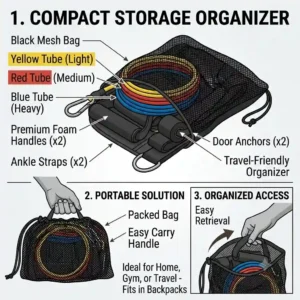
The Blueprint: Use the Undersun Fitness Outdoor Anchor Sleeve and a high-quality travel pouch.
-
The Why: Rough tree bark or rusty playground poles will shred an unprotected rubber tube in minutes. Wrapping the protective sleeve around these surfaces ensures you can work out anywhere without risking a dangerous band snap.
How to Choose High-Quality Resistance Tube Accessories
When shopping for these items, it is incredibly easy to get distracted by cheap multi-packs that promise ten pieces of gear for under fifteen dollars. To avoid buying low-quality items that fail within weeks, look for these key indicators:
-
Stitching Density: Inspect the nylon webbing where it joins the metal rings. Look for box-stitch patterns with heavy nylon thread, as standard single-stitch lines will quickly pull apart under heavy tension.
-
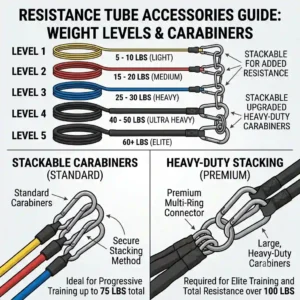
Metal Ring Type: Always choose solid, welded steel D-rings. Non-welded rings can bend open under high tension, creating sharp edges that can slice through your nylon straps or bands.
-
Core Material of Handles: Avoid handles made of thin, hollow plastic. Look for heavy-walled ABS cores or steel inserts that will not crush or bend when you squeeze them hard.
-
Hardware Material: Opt for powder-coated steel or stainless steel components to prevent rust, especially if you train in a humid garage or outdoors.
Common Mistakes When Buying Training Gear
The biggest mistake I see home fitness enthusiasts make is assuming that all door anchors are created equal. Many cheap kits include an anchor with a hard, small plastic ball inside the nylon webbing. Over time, pulling against this hard ball pulls the plastic directly into your door frame, scratching the paint, gouging the wood, or even cracking the door trim. Always look for a large, soft foam wheel that distributes the pressure evenly over a wider surface area.
Another major pitfall is ignoring the diameter of the attachment loops. If you purchase handles with narrow webbing loops, you will struggle to slide thick, heavy-duty resistance tubes through them. This forces you to bunch up the rubber, creating high-friction pinch points that significantly accelerate wear and tear on your bands.
Features That Actually Matter (And Those That Don’t)
In the fitness marketing world, brands love to invent complex-sounding features to justify premium prices. Here is a quick guide to help you cut through the noise:
-
Matters: Sweat-Resistant Materials. Grips made from open-cell foam act like a sponge, absorbing sweat, oil, and dirt. Over time, they break down, smell bad, and slip in your hands. Textured rubber or high-density neoprene are vastly superior because they can be wiped clean in seconds.
-
Doesn’t Matter: Multi-Angle Swivel Connectors. Many high-end handles feature metal swivel joints that promise “360-degree joint alignment.” In practice, because resistance tubes are highly flexible, the rubber naturally bends to match your joint angle anyway. These swivels simply add unnecessary weight, cost, and another potential point of physical failure.
-
Matters: D-Ring Thickness. A thick steel ring ensures that carabiners can slide and rotate freely without binding, which prevents the band from twisting during rotational movements.
Long-Term Cost & Maintenance Analysis
While purchasing premium attachments might seem like an unnecessary expense initially, doing so saves you significant money in the long run. Let’s look at the true cost of ownership over a two-year training period.
-
The Cheap Alternative: You buy a budget accessory bundle for $12. Within three months, the foam handles tear and absorb sweat odor. The door anchor scratches your door frame (requiring a $50 paint touch-up kit), and a frayed nylon strap causes a band to snap, requiring you to buy a new $20 resistance tube. Total Two-Year Cost: $82+ and potential injury.
-
The Premium Setup: You invest in a pair of high-quality handles ($25) and a heavy-duty door anchor ($15). These durable pieces protect your bands from friction, keep your door frames safe, and last for years without needing replacement. Total Two-Year Cost: $40.
By investing in high-quality hardware upfront, you protect your doors, extend the life of your resistance tubes, and ensure a much safer, more comfortable workout environment.
Conclusion
Upgrading your home workouts does not require a massive footprint or thousands of dollars in commercial gym equipment. By adding specialized resistance tube accessories to your home setup, you unlock the ability to target muscles from precise angles, protect your home’s doors and walls, and significantly extend the lifespan of your bands. Focus on purchasing high-quality, durable components with thick webbing, solid steel rings, and sweat-resistant grips to ensure your training remains safe, smooth, and highly effective for years to come.
FAQs
❓ How do I prevent my door anchor from damaging my door frame?
✅ Always place the door anchor on the hinge side of the door, and ensure you use an anchor with a thick, soft foam stopper rather than a hard plastic insert. Wipe the door frame clean occasionally to prevent dust from acting as an abrasive under pressure…
❓ Can I use standard cable machine handles with resistance tubes?
✅ Yes, you can. However, ensure the carabiners on your bands are large enough to clip onto the thick metal rings of the cable handles without pinching or scraping the latex tubing…
❓ How often should I replace my resistance band handles and straps?
✅ High-quality nylon and steel accessories can easily last 3 to 5 years with regular home use. Inspect the stitching monthly for fraying and replace them immediately if you notice any structural tearing…
❓ Are wall-mounted anchors safe to install in drywall?
✅ No, never mount resistance band anchors directly into drywall using plastic anchors. The dynamic pulling force will easily pull them out. Always screw the mounting bolts directly into solid wooden wall studs…
❓ Do I need different accessories for flat loop bands vs tube bands with clips?
✅ Yes, tube bands with clips connect directly to D-rings on handles and ankle straps. Flat loop bands require an anchor strap or a specialized grip handle that loops around the rubber without sharp edges…
Recommended for You
- 7 Best Non Latex Resistance Tubes for Safe Strength Training (2026)
- 7 Best natural latex resistance bands for 2026: Get Shredded Fast! 🏋️♂️
- 5 Best Quantum Resistance Bands of 2026: Expert Strength Training Guide
Disclaimer: This article contains affiliate links. As an Amazon Associate, I earn from qualifying purchases. If you purchase products through these links, we may earn a small commission at no additional cost to you.
✨ Found this helpful? Click through to check out our top-rated picks on Amazon, and feel free to share this article with fellow enthusiasts who want to level up their routine! 💬🤗
[addtoany]
