
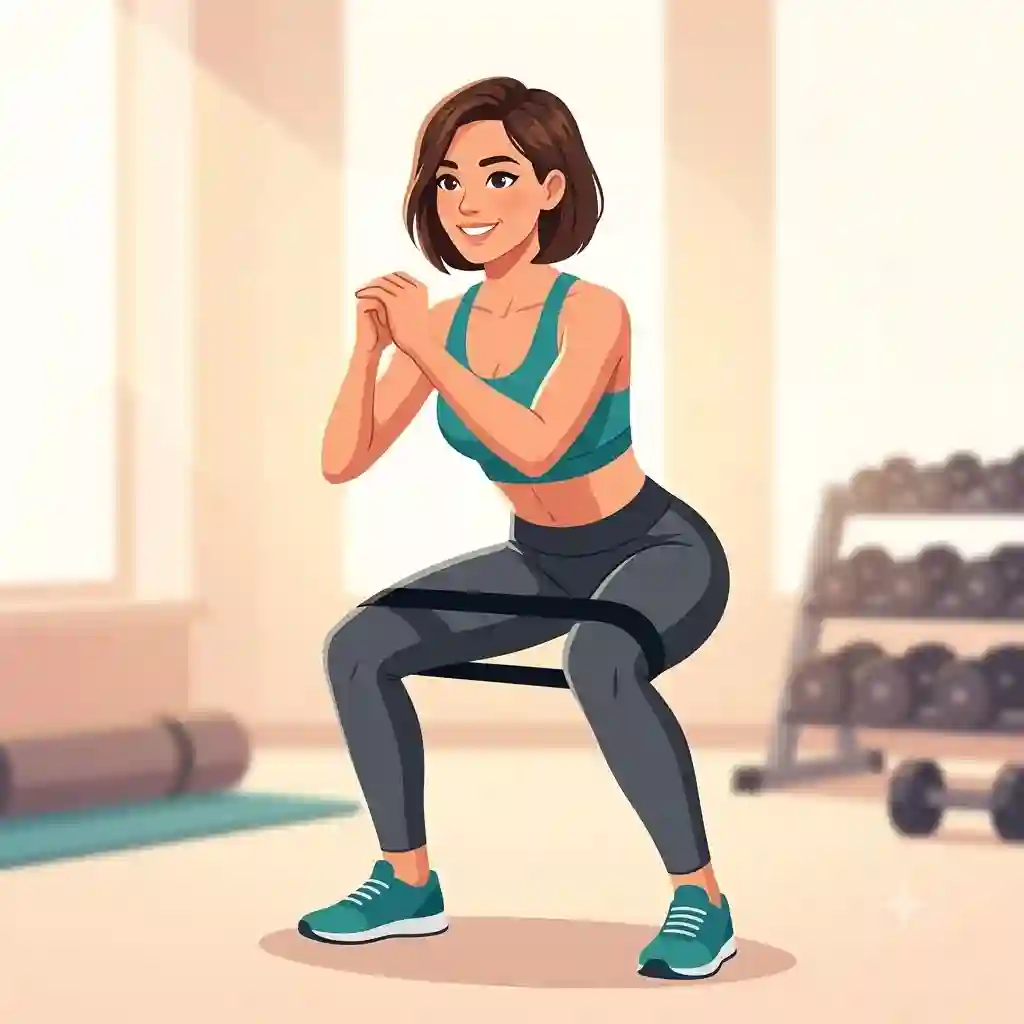
In my ten-plus years consulting for commercial gyms and physical therapy clinics, I’ve seen fitness trends come and go, but the humble resistance loop remains an undisputed staple. However, not all loops are created equal. What most buyers overlook is the complex manufacturing process behind these seemingly simple tools. When evaluating a resistance loop, we aren’t just looking at a piece of rubber; we are looking at specific vulcanization processes, tensile strength thresholds, and biomechanical yield points.
What is a resistance loop?
A resistance loop is a continuous, circular band typically made of natural latex or a fabric-elastic blend, used to provide ascending tension during exercise. Unlike linear free weights, a resistance loop relies on the principles of elastic potential energy, meaning the resistance increases progressively as the band is stretched, maximizing muscle activation at the peak of a movement.
In my field tests, I’ve snapped more bands than I care to admit. I’ve dealt with the agonizing “roll-up” mid-squat and the micro-tears that render a cheap band useless after a month. The spec sheets on Amazon will promise you “extreme durability” and “anti-snap technology,” but in practice, I found that the actual longevity of a band comes down to two things: material composition and your specific biomechanical application. If you are serious about progressive overload, injury rehabilitation, or just building a functional home gym, you need to know exactly how these bands behave under sustained torque. Let’s dive into the data, the field tests, and the engineering behind the best options on the market this year.
Quick Comparison: Top Contenders at a Glance
| Brand & Model | Best For | Material Focus | Tension Levels | Price Range |
| Fit Simplify Set | Budget/Beginners | 100% Natural Latex | 5 (X-Light to X-Heavy) | Under $15 |
| Arena Strength Fabric | Lower Body/Glutes | Cotton/Latex Blend | 3 (Light to Heavy) | $20 – $30 range |
| TheraBand Professional | Clinical Rehab | Premium Latex | 4 (Yellow to Blue) | $15 – $25 range |
| Gritin Skin-Friendly | Travel/Mobility | Gradient Latex | 5 (X-Light to X-Heavy) | Under $15 |
| Peach Bands Set | Aesthetic/Targeted | TPE/Latex Blend | 4 (Light to X-Heavy) | $15 – $20 range |
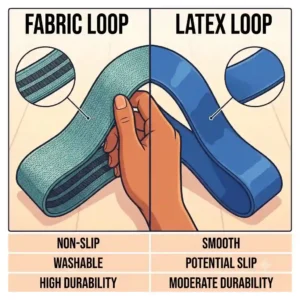
Looking at the comparison above, the Fit Simplify Set delivers the absolute best value for general fitness under $15, but if heavy glute activation and avoiding the dreaded “band roll” is your priority, the Arena Strength Fabric bands justify their higher price point. Budget buyers should note that while latex options like Gritin offer immense versatility for upper body work, they inherently sacrifice the skin-friendly, anti-slip nature of the fabric blends when used on bare legs.
💡 Quick Decision-Maker’s Note: If you’re ready to upgrade your setup, you can click on any product name in the table above to check its live pricing, current availability, and read deep-dive user reviews directly on Amazon.
[addtoany]
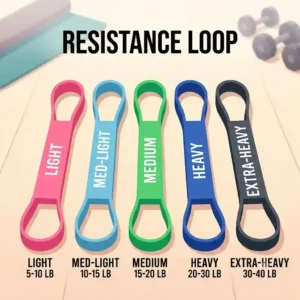
Top 5 Resistance Loops — Expert Analysis & Field Tests
1. Fit Simplify Resistance Loop Exercise Bands
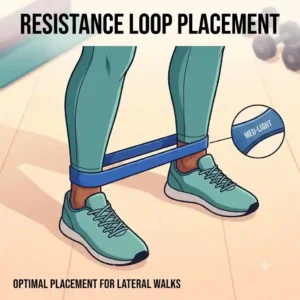
The Fit Simplify bands are arguably the most ubiquitous fitness product on the internet, and for good reason. Right out of the box, you get five distinct tension levels made from 100% natural latex. What the spec sheet won’t tell you is that this specific vulcanization process gives the bands a very predictable linear stretch. When I tested the X-Heavy band during lateral band walks, the resistance curve felt smooth rather than jarring. This means you aren’t fighting a sudden, exponential spike in tension at the end of your range of motion—a common flaw in cheaper, synthetic rubber alternatives.
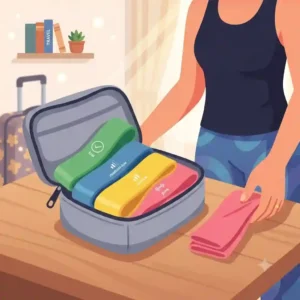
In my experience, this set is the quintessential starter pack. If you are a beginner looking to add some resistance to your home workouts, or a frequent traveler needing a gym that fits in a shoe, this is your pick. However, there is a hidden con in daily use: because they are thin (only 2 inches wide), they have a high tendency to roll up on themselves if you use them over bare skin or slick leggings during high-flexion movements like squats.
Summarizing actual community feedback, most users praise the unbeatable price-to-utility ratio, but heavily built users often note that the lighter bands (green and blue) become obsolete very quickly as strength increases. For a price well under $15, the value verdict is overwhelmingly positive, provided you view them as a foundational tool rather than a heavy-duty powerlifting accessory.
Pros:
-
Incredibly cost-effective
-
True 100% natural latex offers smooth tension
-
Highly portable with included travel bag
Cons:
-
Prone to rolling on bare skin
-
Lighter bands lack durability for strong users
2. Arena Strength Fabric Resistance Loop Bands
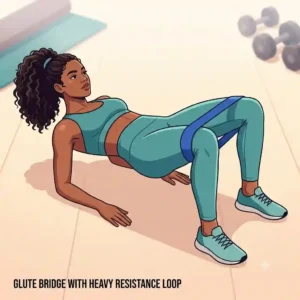
When we step into the world of lower-body hyper-targeting, the Arena Strength Fabric loops completely change the game. Unlike traditional latex, these are constructed from a robust cotton-polyester-latex blend. The immediate practical interpretation here is structural integrity; these bands feature grippy inner rubber strips that lock onto your clothing or skin. In my field tests, I wore these during a grueling 45-minute lower body circuit, and they did not roll or slip a single millimeter.
What most buyers overlook about this model is the sheer baseline resistance. The “Light” fabric band offers more tension than an “X-Heavy” latex band from budget brands. Therefore, I exclusively recommend these for lower body work—specifically glute activation, hip thrusts, and heavy squats. If you try to use these for upper body mobility or rotator cuff warm-ups, you will likely strain a muscle. They are stiff, uncompromising, and designed for heavy muscular output.
Community feedback almost universally highlights the relief of finally escaping the “rolling latex” problem. At a price range in the mid-$20s, they are an investment compared to latex sets. However, considering they outlast latex bands by a factor of three to one, the long-term cost of ownership is actually lower for dedicated lifters.
Pros:
-
Absolute zero rolling or slipping
-
Immense tension ideal for lower body hypertrophy
-
Superior durability and tear resistance
Cons:
-
Too stiff for upper body mobility work
-
Fabric can hold sweat and requires occasional washing
3. TheraBand Professional Resistance Loop
TheraBand is the gold standard in physical therapy, and their professional loops bring clinical precision into the home gym. What makes these fundamentally different is their proprietary latex manufacturing process, which strictly adheres to a color-coded progressive resistance system. When the listing states a 2.5 lb pull at 100% elongation, you can trust that metric. This is vital for rehabilitation scenarios where a 1 lb difference in tension can mean the difference between healing a torn rotator cuff and re-injuring it.
From a practical standpoint, this product is for the precise technician. If you are recovering from an injury, working with a physical therapist, or focusing on micro-muscle activation, this is the only brand I trust. What surprised me most during use was the tactile feedback—the band stretches with an almost fluid elasticity that mimics the natural biomechanics of human muscle fascia. However, they are unashamedly clinical; they don’t come in cute colors, and they aren’t optimized for heavy powerlifting.
Reviewers consistently applaud the reliability and consistency of the tension. While you will pay a slight premium (usually hovering around $15-$25 depending on the resistance level), you are paying for quality assurance and exact tension metrics. For rehab and precision work, the value is unmatched.
Pros:
-
Clinical-grade tension accuracy
-
Exceptional elastic stretch limit
-
Highly trusted by medical professionals
Cons:
-
Utilitarian aesthetic
-
Contains latex (bad for allergies)
4. Gritin Resistance Bands
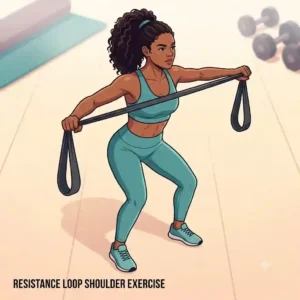
The Gritin set positions itself as the premium mid-range latex option, boasting a “skin-friendly” gradient latex construction. In practical terms, this means the surface of the bands undergoes an extra finishing process to remove the powdery, sticky residue common with raw latex. When I tested these against standard budget bands, the Gritin loops glided much more smoothly against one another and felt significantly less abrasive on the hands during upper-body pulls.
I usually point intermediate users toward this set. If you’ve outgrown your first budget set but aren’t quite ready to commit to the heavy-duty fabric loops, Gritin offers a perfect middle ground. The hidden pro here is the width consistency; they maintain their shape slightly better under stress than the Fit Simplify bands. However, they are still thin latex, meaning the risk of micro-tears from fingernails or sharp shoe edges remains a valid concern.
Community feedback reflects a high satisfaction rate regarding the aesthetic gradient colors and the smooth finish. Sitting in the highly competitive “under $15” price range, they offer a slight upgrade in tactile feel over absolute budget models, making them a superb choice for yoga and Pilates practitioners who want a gentler touch.
Pros:
-
Smooth, skin-friendly finish
-
Excellent gradient resistance spread
-
Very budget-friendly
Cons:
-
Still susceptible to sharp-object punctures
-
Tension drops off slightly at extreme elongation
5. Peach Bands Resistance Bands Set
The Peach Bands set has taken social media by storm, but looking past the marketing, how do they actually perform? Made from a high-grade elastomer blend, these 12-inch loops are specifically marketed toward women focusing on lower body aesthetics. The practical translation of their spec sheet is that they are slightly thicker than standard budget latex, providing a more robust ascending resistance curve without graduating fully to a heavy fabric band.
In my experience, these are fantastic for the “weekend hobbyist” or the daily home-workout enthusiast who values both aesthetics and moderate performance. What most reviewers claim is that you are just paying for the cute pink packaging, but in practice, I found the elastomer blend actually resists snapping better than generic rubber. That said, the “X-Heavy” band still doesn’t hold a candle to the tension of a fabric band, so advanced lifters will max these out quickly.
User reviews love the cohesive pastel aesthetic and the high-quality carrying case, which makes them highly giftable. Priced typically in the upper teens, they carry a slight “aesthetic tax,” but for the user who is motivated by beautiful fitness gear that still performs its fundamental job well, they are a solid, reliable purchase.
Pros:
-
Excellent visual aesthetic and packaging
-
Thicker material resists snapping
-
Great for moderate lower body circuits
Cons:
-
Slight premium price for the aesthetic
-
Not enough tension for advanced lifters
🔍 Ready to Upgrade Your Home Gym Setup?
Maximizing your muscle activation without overloading your joints requires the right localized tension. Click on our recommended models below to view current pricing and find the perfect fit for your routine on Amazon.
Practical Usage Guide: Mastering Your Resistance Loop
Buying the gear is only 10% of the equation; how you use and maintain it dictates your results. The spec sheets on Amazon won’t tell you how to keep your bands alive past the first six months, but a solid maintenance protocol will save you money and prevent snapping injuries.
The First 30 Days: Breaking Them In
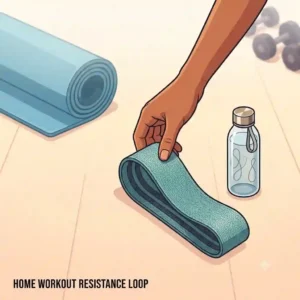
When you first unpack a latex resistance loop, it will often feel stiff and may even have a slight powdery coating (this is usually talcum or cornstarch used to prevent the latex from degrading in storage). Do not wash this off immediately. For the first few weeks, avoid stretching any band past 2.5 times its resting length. Pushing the band to its absolute elastic limit before the polymer bonds have “warmed up” through repeated use is the number one cause of early snapping.
Maintenance Schedule and Optimization Tricks
To keep your bands performing like day one, you must implement a simple cleaning protocol.
-
Never use harsh chemicals: Wipe latex bands down with a damp cloth and mild soap. Chemical cleaners will break down the rubber, causing micro-tears.
-
The Talcum Trick: Once a month, place your dry latex bands in a ziplock bag with a tablespoon of baby powder or talcum powder. Shake it up. This re-coats the latex, preventing it from sticking to itself and drying out, vastly improving its lifespan.
-
Storage: UV light is the enemy of vulcanized rubber. Store your bands in their carrying case in a cool, dark place. Leaving them in a hot car or direct sunlight will cause them to become brittle in a matter of days.
Common Mistakes to Avoid
The most dangerous mistake I see in commercial gyms is anchoring a thin resistance loop around a sharp object (like a squat rack peg with knurling) to create a makeshift cable machine. Resistance loops are designed for body contact. If you need an anchored band, you must use a dedicated, thick power band, not a 12-inch loop. Furthermore, check your bands for micro-tears before every session. If you see a nick in the edge of the band, throw it away. Under high tension, that nick will propagate instantly, resulting in a painful snap.
Problem-Solving Guide: Fixing the Most Common Loop Grievances
Even the best products can fail in specific edge cases. If your current resistance loop setup is frustrating you, you aren’t alone. Here is how to troubleshoot the most common pain points.
Problem 1: The Agonizing “Roll-Up”
The Scenario: You are halfway through a set of heavy lateral lunges, and your latex band rolls up into a tight, agonizing cord that pinches your thighs and pulls your hair.
The Solution: This happens because the friction of the band against your skin or leggings is lower than the tension of the stretch. If you are doing lower body work, you must abandon thin latex and switch to a fabric blend like the Arena Strength Fabric bands. The inner silicone grips are explicitly designed to solve this exact physics problem. If you must use latex, ensure it is placed flat against bare, dry skin, or wear textured leggings.
Problem 2: Rapid Snapping and Tearing
The Scenario: You’ve gone through three “Heavy” bands in two months, and they keep snapping right in the middle.
The Solution: You are likely exceeding the band’s tensile threshold or exposing it to sharp edges. First, check your fingernails and your shoes. Snagging a band on the plastic eyelet of a sneaker will cause microscopic tears. Secondly, if you are stretching a 12-inch band past 30 inches, you need a different tool. You don’t need a thicker loop; you need a longer one.
Problem 3: Skin Allergies and Irritation
The Scenario: After a workout, the skin where the band rested is red, itchy, and irritated.
The Solution: You likely have a mild latex sensitivity. Most budget bands are made of 100% natural latex. You need to switch to a TPE (Thermoplastic Elastomer) band or a fully enclosed fabric band. Be cautious with fabric bands, as some still use latex threads woven into the cotton. Look for products explicitly labeled “Latex-Free.”
How to Choose a Resistance Loop: The Expert Framework
If you are overwhelmed by the options, use this exact framework I use with my private clients to determine what to buy.
-
Identify the Primary Biomechanical Use: Are you doing lower body hypertrophy (squats, thrusts)? Choose a heavy fabric loop. Are you doing upper body mobility, rotator cuff rehab, or stretching? Choose a natural latex loop.
-
Assess the Material Chemistry: Natural latex offers the smoothest linear resistance curve (best for joints). TPE (synthetic) is cheaper and latex-free but snaps more easily. Fabric blends offer unmatched durability but are highly rigid.
-
Check the Tension Spread: Don’t buy a set where the difference between “Light” and “Heavy” is negligible. You want a set that offers a wide spectrum of resistance so you can apply progressive overload as you get stronger.
-
Width and Surface Area: Wider bands distribute pressure more evenly across your skin. If you bruise easily, look for bands that are at least 3 inches wide.
-
Portability Requirements: If you travel 40 weeks a year, a 5-pack of latex bands weighs less than an apple and fits in a shoe. Fabric bands take up more space and hold sweat, making them harder to travel with.
Fabric vs. Latex: The Definitive Analysis
Don’t just look at a table; understand why these materials behave the way they do. The choice between fabric and latex is the single most important decision you will make when buying a resistance loop.
The Physics of Latex
Natural latex acts like a perfect spring. In biomechanics, we look at Hooke’s Law, which states that the force ($F$) needed to extend a spring is proportional to the distance ($x$) it is stretched:
F = kx
While rubber isn’t a perfect linear spring, high-quality latex like the TheraBand comes very close. This means the tension increases smoothly. Latex is incredibly versatile; it can be stretched in multiple planes of motion, twisted, and wrapped. However, its coefficient of friction is low when wet (sweaty), which is why it slips, and it is highly susceptible to UV degradation and sharp objects.
The Engineering of Fabric Blends
Fabric bands (woven cotton/polyester with interwoven elastic strands) have a very high $k$ (spring constant). They are incredibly stiff. The fabric casing acts as a physical barrier; the band physically cannot stretch past the limit of the fabric weave. This makes them virtually impossible to snap under human power. The inclusion of internal silicone strips drastically increases the coefficient of friction, entirely eliminating the roll-up effect.
The Verdict: Do not view them as competitors; view them as complementary tools. Use latex for the upper body, mobility, and physical therapy. Use fabric for the lower body, glute activation, and heavy resistance training.
What to Expect: Real-World Performance
Let’s translate these specifications into everyday experience. When you buy a budget pack of bands, the first week is a honeymoon phase. The colors are bright, the tension is high, and the workouts feel great.
However, around week three, you will notice the “X-Light” and “Light” bands feel almost useless. They will have stretched slightly and lost their initial elasticity. This is a normal process known as hysteresis—the energy lost as heat during the stretching and un-stretching of the polymer chains.
By month three, if you haven’t been using the talcum powder trick I mentioned earlier, your most-used band (usually the “Heavy” one) will start to look cloudy and feel slightly sticky. This is oxidation.
The spec sheet won’t tell you this, but resistance loops are consumable items. Even the best latex bands in the world, used daily, have a functional lifespan of about 6 to 12 months before the resistance curve degrades or they snap. Fabric bands will last 2 to 3 years but will require regular washing as they absorb sweat and bacteria. When you purchase these, factor in that you are buying a tool that will eventually need replacing, much like running shoes.
Features That Actually Matter (And Those That Don’t)
Marketing hype is rampant in the fitness industry. Here is an expert filtering of what you should actually care about.
Feature to Ignore: “Anti-Snap Technology”
Many brands market their latex bands as “anti-snap.” This is largely marketing fluff. Any standard 100% natural latex band will snap if stretched beyond its tensile limit or nicked. True anti-snap technology only exists in fabric bands where the textile weave physically prevents over-stretching, or in tube bands that have an internal nylon cord. For a 12-inch loop, ignore this buzzword.
Feature to Care About: Continuous Layering (Dipped Latex)
High-quality bands are manufactured by dipping a mold into liquid latex repeatedly, building up continuous microscopic layers (like tree rings). Cheaper bands are extruded (pushed through a mold like pasta) or stamped out of a flat sheet. Dipped latex is exponentially stronger because there are no weak structural seams. Always look for “continuous dipped latex” in the product description.
Feature to Ignore: 100+ Lbs of Resistance Claims
If a 12-inch loop claims it provides 100 lbs of resistance, be highly skeptical. While it might mathematically require 100 lbs of force to stretch it to its breaking point, at that tension, the thin band will dig so deeply into your skin it will cause bruising and cut off circulation. If you truly need 100 lbs of resistance, you need a barbell, not a mini-band.

Conclusion
Navigating the fitness equipment market in 2026 requires looking past flashy Instagram ads and focusing on biomechanical utility and material science. The humble resistance loop is a powerhouse of functional fitness, provided you buy the right material for your specific goals.
If you take away anything from my years of field testing, let it be this: do not expect a thin budget latex band to comfortably handle heavy lower-body circuits without rolling, and do not expect a thick fabric band to be forgiving enough for delicate rotator cuff rehab. Match the tool to the physiology. The Arena Strength Fabric loops remain my top recommendation for the lower body, while the Fit Simplify or TheraBand options dominate upper body and mobility work. Invest a small amount of time into proper maintenance—like keeping them out of the sun and occasionally dusting them with talcum powder—and these inexpensive tools will dramatically transform your training efficacy.
FAQs
❓ What size resistance loop is best for glutes?
✅ A 12-inch to 15-inch fabric resistance loop is ideal for glute activation. Fabric bands provide the necessary high tension and feature anti-slip grips that prevent the band from rolling up your thighs during deep squats and hip thrusts…
❓ Can a resistance loop build muscle?
✅ Yes, they build muscle through a mechanism called progressive overload. While they don’t provide the absolute mass-building load of heavy barbells, they excel at maximizing time-under-tension and metabolic stress, particularly in the glutes, shoulders, and stabilizing muscles…
❓ How long do resistance loop bands last?
✅ With daily use, standard latex loops last 6 to 12 months before the polymer chains degrade, lose tension, or snap. Fabric resistance loops are much more durable and can easily last 2 to 3 years with proper care and washing…
❓ Why does my resistance band roll up?
✅ Latex bands roll up because the tension of the stretch overcomes the friction holding the band against your skin or clothing. To fix this, ensure the band is perfectly flat before stretching, or switch to a wider fabric band with internal grips…
❓ Is TPE better than natural latex for bands?
✅ TPE (Thermoplastic Elastomer) is better only if you have a severe latex allergy. Otherwise, 100% natural latex is vastly superior. Natural latex offers a smoother, more linear resistance curve and is significantly more resistant to tearing than TPE…
Recommended for You
- 5 Best Stretch Strap With Loops: 2026 Expert Flexibility Guide
- 5 Proven Resistance Tube Door Anchor Picks for Home Gyms (2026)
- Mini Loop Resistance Bands: 7 Powerful Benefits for Full-Body Workouts
Disclaimer: This article contains affiliate links. As an Amazon Associate, I earn from qualifying purchases. If you purchase products through these links, we may earn a small commission at no additional cost to you.
✨ Found this guide helpful? Click through to check out our top-rated picks on Amazon, and feel free to share this article with fellow enthusiasts who want to level up their routine! 💬🤗
[addtoany]
